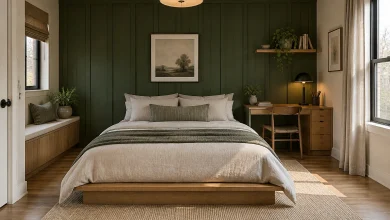
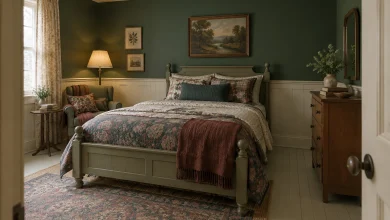
Bedroom window seat styling works best when the seat has a clear role: a reading perch, a storage bench, a daybed extension, a desk companion, or a focal point behind the bed. Start with the built-in form—drawer fronts, open cubbies, a lift-top compartment, or a simple platform—then use cushions and pillows to make it inviting. Repeating colors and materials already present in the bedding, floor, window frames, or surrounding cabinetry helps the nook belong to the room. From tailored bay benches to playful toy storage and bookcase-framed alcoves, the following designs show practical ways to balance comfort, function, and visual calm.
1. Pair a Cushioned Bay Bench With Clean-Lined Drawer Storage
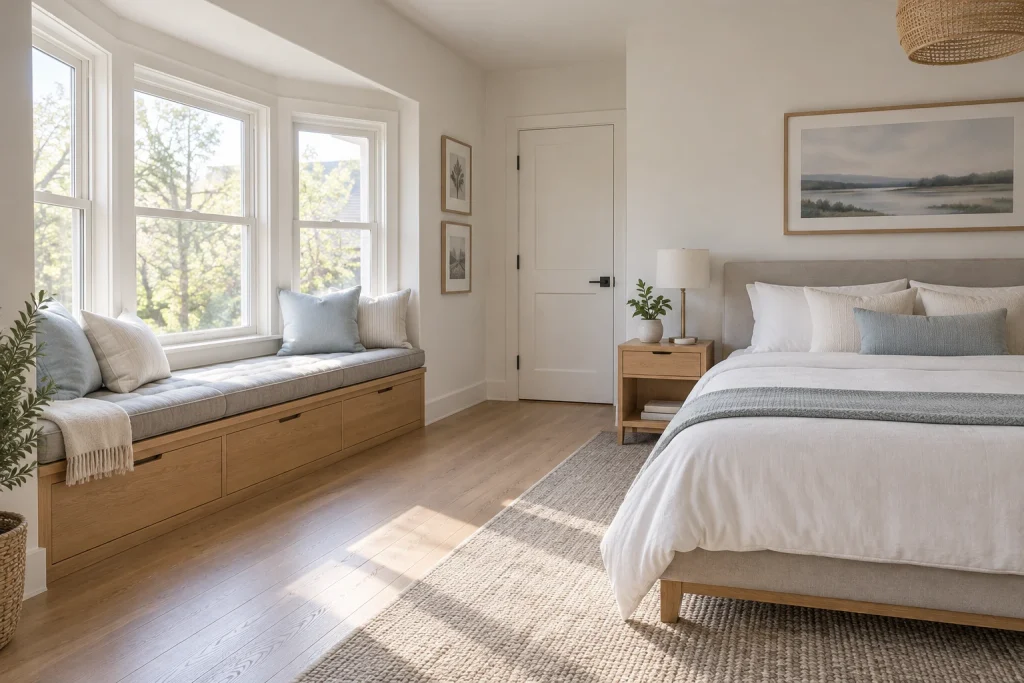
This bedroom-window-seat-styling approach makes the bay feel purposeful without competing with the bed. A long, pale gray cushion follows the window wall, while three warm-oak drawer fronts turn the base into a substantial built-in element. Soft blue and creamy pillows repeat the bedroom’s quiet palette, and a tasseled cream throw softens the bench’s tailored lines. The bed, upholstered in a light neutral fabric and dressed in white bedding, sits opposite the window seat with an open strip of wood floor between them. That breathing room lets daylight reach the floor and keeps the bench readable as its own destination. A woven rug, pale wood flooring, and restrained framed art reinforce the room’s calm Scandinavian-modern direction.
Why it works: The bench balances softness above with visually grounding wood storage below, while the limited blue-gray, white, and oak palette keeps the long wall from feeling busy.
- Pale gray fitted seat cushion
- Warm-oak drawer base with recessed pulls
- Soft blue and cream throw pillows
- Cream tasseled throw
- Open wood-floor passage between bed and bench
Design tip: Use one long seat cushion and vary pillows only at the ends to keep a wide bench looking tailored.
2. Use Open Under-Seat Storage to Lighten a Rich Color Scheme
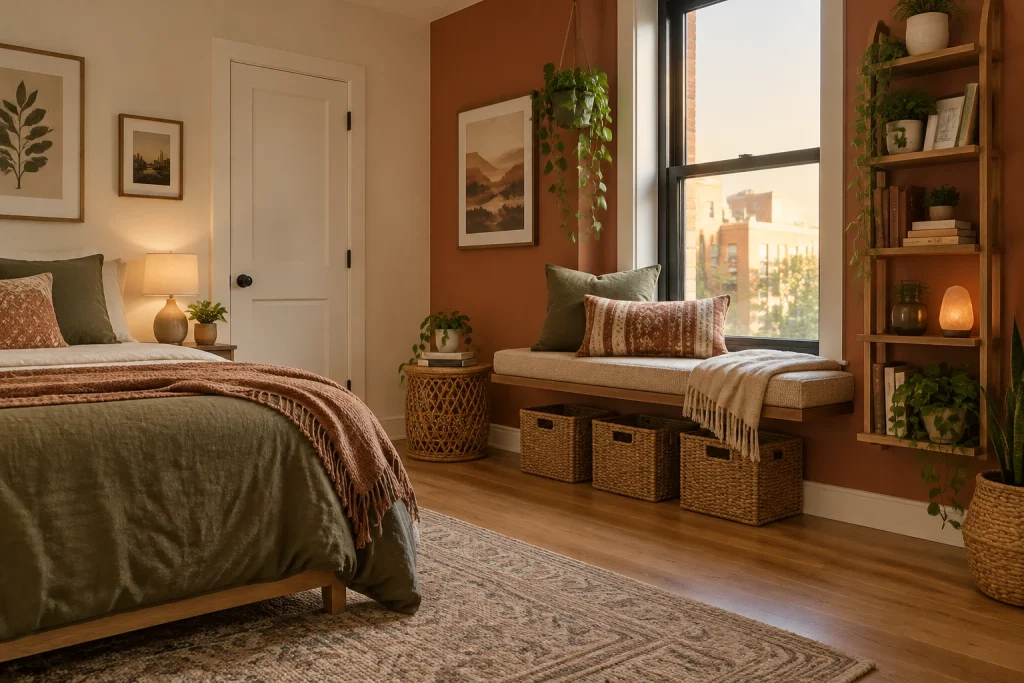
Here, the window seat reads as a slim floating perch rather than a heavy built-in. Its warm wood base is set below a tall black-framed window, with open space underneath occupied by four woven baskets. A cream seat cushion, olive-green back pillow, patterned lumbar pillow, and fringed throw build a relaxed mix of textures against the terracotta accent wall. The same earthy palette continues across the nearby bed, where olive bedding and a rust-toned throw echo the window nook. To the right, a narrow wall-mounted ladder-style shelf rises beside the window and holds books, plants, and small objects. The woven round table beside the bench continues the natural-fiber theme without adding another solid, boxy form.
Why it works: The open base preserves visual air around the seat, while baskets provide a repeatable storage element that relates to the rattan table and floor planter.
- Wood floating-style window bench
- Four woven storage baskets
- Terracotta wall behind the seat
- Olive and patterned accent pillows
- Wall-mounted ladder-style shelving
Design tip: Choose matching baskets with cutout handles so under-seat storage looks ordered rather than improvised.
3. Turn the Window Wall Into a Layered Headboard Moment

This small-bedroom composition places a cushioned window seat directly behind the bed, letting the two pieces form one layered focal wall. The seat’s walnut-toned base and cream cushion introduce a horizontal band beneath the wide window, while sage pillows create a soft backdrop above the bed pillows. Cream curtains frame the glass without interrupting the centered view, and the bedding repeats the palette: white layers are finished with a deep sage throw and a textured green lumbar pillow. Floating wood night ledges on both sides keep the floor clear beneath them, each styled simply with a small lamp, books, and a plant or vessel. The narrow side passages remain visibly open, which helps the bed feel centered rather than squeezed into the room.
Why it works: Repeating the walnut, cream, and sage tones across the seat, bed, and night ledges makes several functional pieces read as a cohesive built-in-style composition.
- Cream-cushioned window seat behind the bed
- Walnut-toned seat base
- Paired floating night ledges
- Sage pillows and bed throw
- Sheer cream window curtains
Design tip: Keep the seat cushion lower than the piled bed pillows so the window ledge remains visually distinct.
4. Frame the Window Seat With Library Shelving
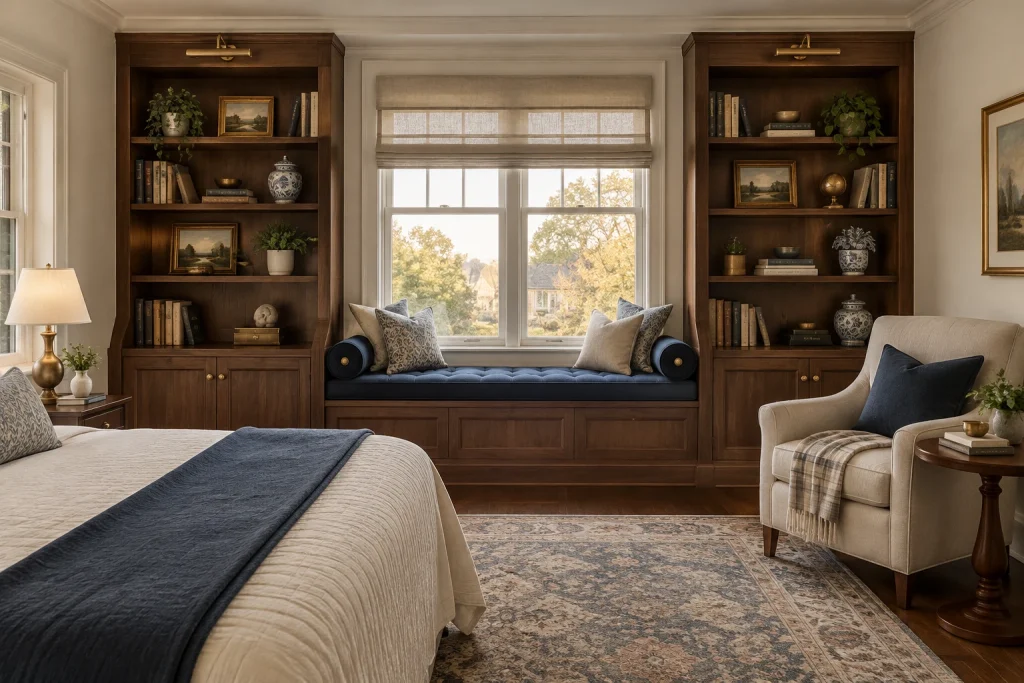
For a more traditional take on bedroom-window-seat-styling, this deep navy bench is framed by two tall walnut bookcases. The shelving gives the window wall a strong architectural outline, while lower cabinets add a quieter, closed-storage band beneath the displayed books, framed landscapes, ceramic vessels, plants, and small decorative objects. A roman shade filters the bright center window above the tufted bench cushion. Blue-and-cream pillows, including cylindrical bolsters at each end, make the seat feel tailored and connected to the navy coverlet on the bed. On the right, a cream upholstered armchair with a navy pillow and plaid throw creates a second reading-ready layer beside a small round wood table. The patterned rug pulls navy, cream, and muted warm tones across the open floor.
Why it works: The symmetrical bookcases give the window seat presence, while closed lower cabinetry offsets the visual detail of the open shelves and keeps the composition grounded.
- Tufted navy window-seat cushion
- Walnut bookcases flanking the window
- Lower closed cabinet doors with brass knobs
- Blue-and-cream seat pillows and bolsters
- Cream armchair with plaid throw
Design tip: Style bookcases in spaced groupings of books, art, and ceramics so the window seat remains the visual center.
1. Soften an Attic Alcove With a Textured Storage Seat
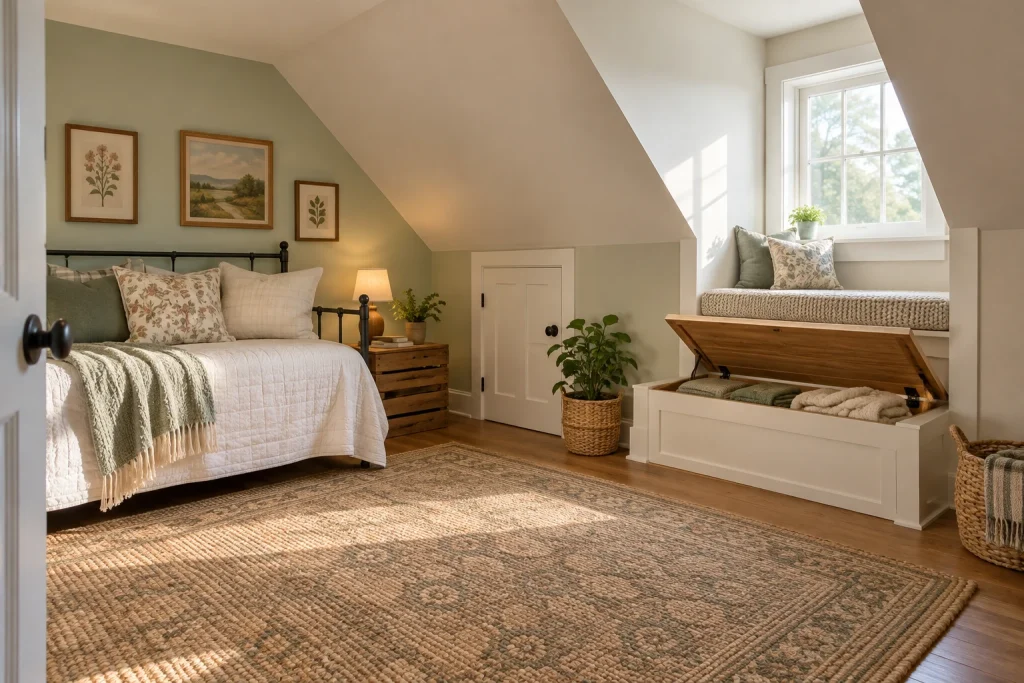
This bedroom-window-seat-styling idea makes the most of the low dormer wall by treating the alcove as a contained resting spot rather than forcing more furniture into it. The white built-in seat sits directly below the window, with a thick, nubby off-white cushion that echoes the room’s layered textiles. Two pillows—one muted green and one botanical print—link the nook to the pale green wall behind the iron bed. The lid is shown open, revealing folded blankets inside; its warm wood underside adds contrast to the painted exterior. Nearby woven baskets, a braided rug, and the wood nightstand bring in natural texture, while the low profile keeps the sharply sloped ceiling visually unobstructed.
Why it works: The seat uses an otherwise awkward low-height zone for seating and concealed blanket storage, while repeated soft greens and woven fibers make it feel integrated with the bedroom.
- White paneled lift-top bench
- Nubby off-white seat cushion
- Muted green and floral pillows
- Visible blanket storage beneath the lid
- Braided natural-fiber rug and baskets
Design tip: Choose a lift-top bench only where the raised lid will clear nearby furniture and circulation.
2. Extend a Daybed Into a Clean-Lined Window Seat
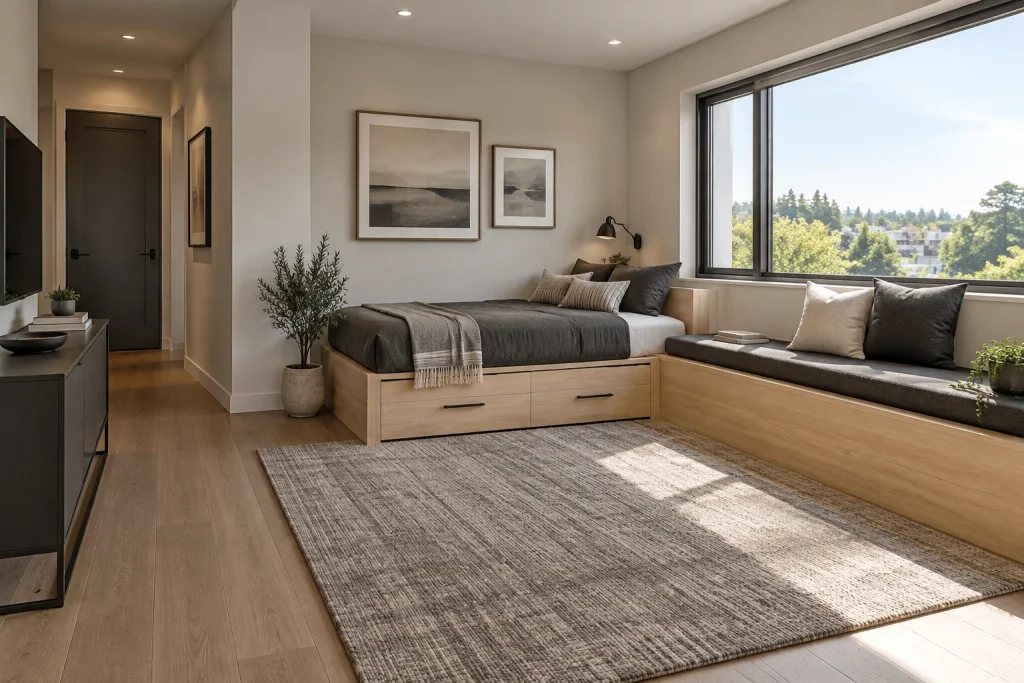
A continuous light-wood platform gives this room a tailored, multipurpose look. The sleeping surface meets a long window bench at a right angle, turning the corner into a connected daybed-and-seat arrangement without adding visual bulk. Two wide drawers with slim black pulls are built into the bed base, balancing the horizontal scale of the bench’s plain wood front. Charcoal bedding, a gray throw, and dark bench cushions sharpen the otherwise warm gray and maple palette. At the window, oversized square pillows make the bench read as a comfortable lounge perch, while a small stack of books and a trailing plant keep the styling restrained. The open rug area clearly separates the built-in furniture from the room’s walking zone.
Why it works: The matching wood finish makes two functional zones read as one deliberate built-in composition, and the darker textiles give the broad platform definition.
- Light-wood platform bed and window bench
- Two large integrated drawers
- Charcoal bedding and bench cushion
- Black drawer pulls and wall sconce
- Large neutral area rug
Design tip: Repeat one wood tone across the bed base and window seat to make a compact room feel less fragmented.
3. Pair a Window Bench With a Streamlined Desk
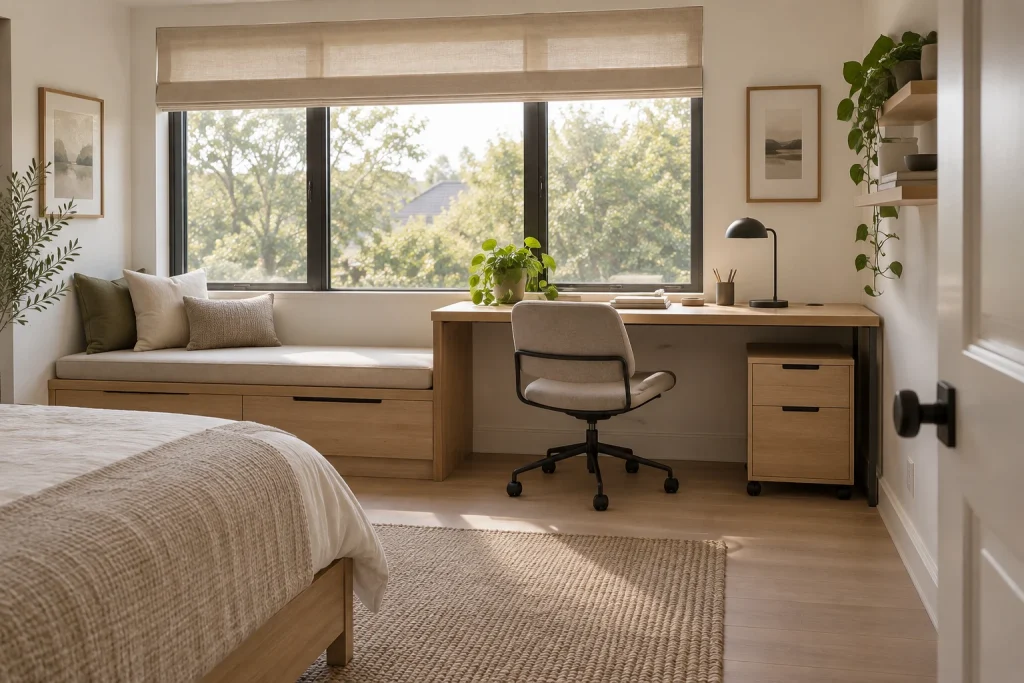
Here, the window wall handles both quiet seating and desk work in one calm composition. A shallow oak bench occupies the left side below the expansive black-framed windows, while a matching desk runs beside it. The bench has a pale cushion and three layered pillows in olive, cream, and textured beige; drawers beneath preserve the uncluttered silhouette. On the desk, a black dome lamp, pencil cup, small books, and a leafy plant create a focused work surface without crowding it. A light upholstered task chair with a black frame repeats the room’s muted black accents, including the window frames and desk supports. A woven rug, linen Roman shade, light flooring, and simple framed artwork keep the palette warm and quietly edited.
Why it works: Shared materials, straight lines, and limited accessories allow the bench and workspace to coexist without competing for attention.
- Oak window bench with drawers
- Matching wood desk
- Light upholstered rolling task chair
- Black dome desk lamp
- Linen Roman shade and woven rug
Design tip: Use one or two pillow colors on a window bench to keep a work-and-sleep space visually settled.
4. Use an Upholstered Lift-Top Seat for Playful Storage
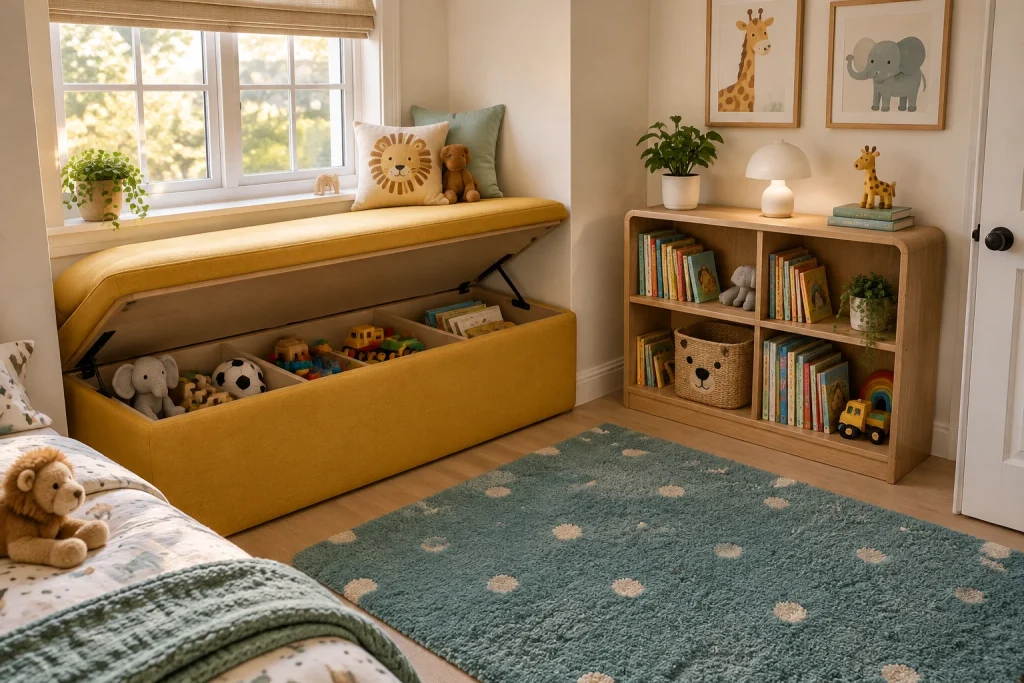
This mustard upholstered window seat brings color, softness, and substantial storage to a child’s room. Its rounded edges and padded top create a friendly counterpoint to the white window trim and warm wood bookshelf. The seat is shown open on black lift hardware, revealing divided compartments filled with soft toys, blocks, vehicles, and books. That interior organization is especially effective: unlike one large storage cavity, the partitions keep different toy types visibly separated. Above the seat, a mint pillow, lion-face pillow, and teddy bear build a playful but contained vignette. Across from it, the low bookshelf holds children’s books, a fabric animal basket, a small lamp, and a few toys. A teal rug with cream dots leaves a broad, soft-looking surface in front of the bench.
Why it works: The upholstered seat supplies both a welcoming window perch and hidden organization, while the mustard, teal, and natural wood palette feels cheerful without becoming overly busy.
- Mustard upholstered lift-top bench
- Black support hardware
- Divided toy-storage compartments
- Rounded wood bookshelf
- Teal dotted play rug
Design tip: Divide deep bench storage into simple sections so toys are easier to sort and put away.
1. Frame a Soft, Tailored Seat With Symmetry
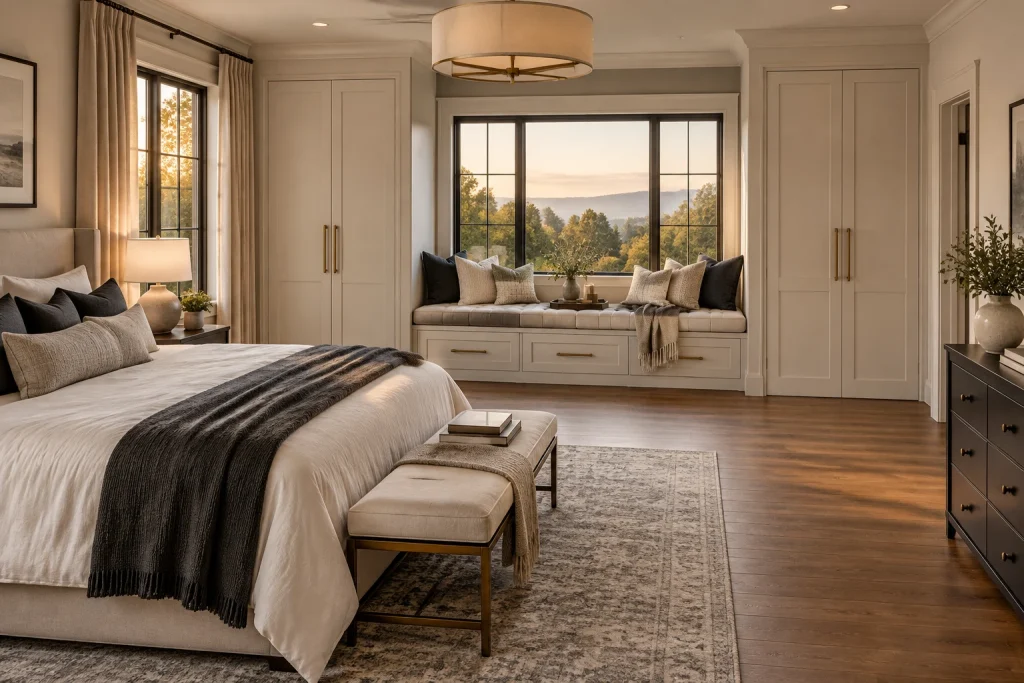
This bedroom-window-seat-styling approach turns the wide black-framed window into a composed focal point. The long cream cushion has a lightly tufted surface and sits above three paneled drawers with warm brass pulls. Tall cream closets on both sides repeat that tailored millwork language, while charcoal corner pillows, smaller textured neutral pillows, and a fringed throw give the seat visual depth. A compact tray with a vase and small objects keeps the center styled without obscuring the view. The palette continues into the room through the cream bed linens, dark throw, brass-framed bench, and charcoal dresser, so the window seat reads as part of one cohesive scheme rather than a separate add-on.
Why it works: The pale built-ins create a quiet architectural frame, while dark accents add enough contrast to define the seat and window. Closed drawers keep the base visually calm.
- Cream tufted seat cushion
- Three paneled drawers with brass pulls
- Matching flanking closets
- Charcoal and textured neutral pillows
- Small tray with vase
Design tip: Use two dark end pillows to anchor a long pale window seat, then layer lighter cushions toward the center.
2. Make Open Storage Part of the Loft Look
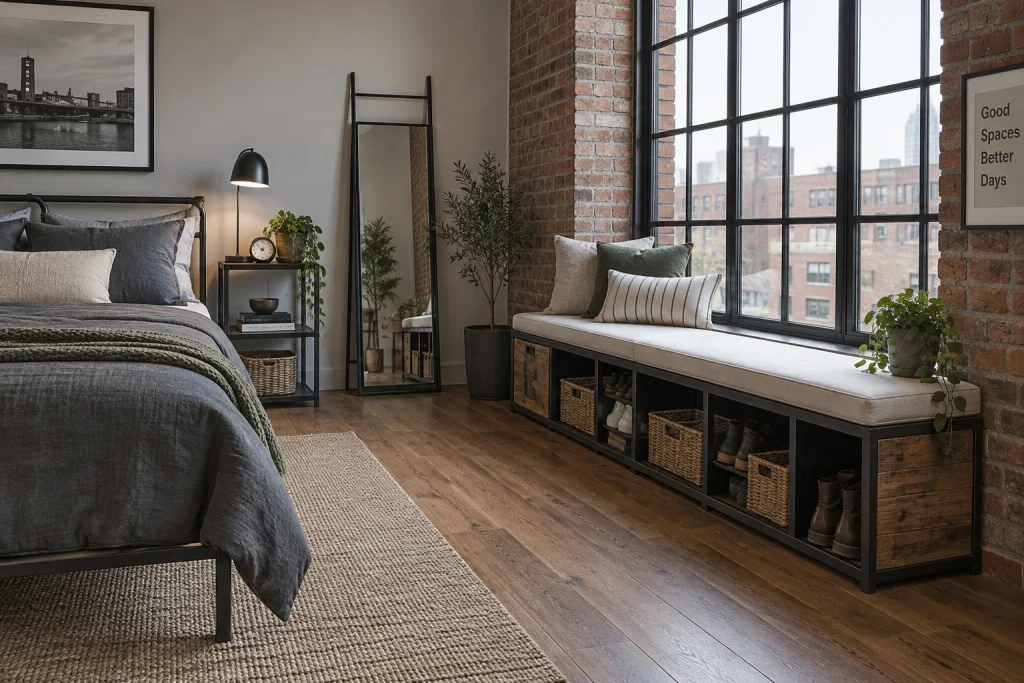
Here, the window seat embraces the room’s industrial materials instead of trying to soften them away. A slim off-white cushion runs the length of a black metal-framed bench beneath the tall grid window, with exposed brick visible at either end. Below, open cubbies hold woven baskets and neatly placed shoes; reclaimed-looking wood panels cap the bench ends and add warmth against the dark frame. Three pillows—solid off-white, muted green, and narrow black-and-white stripe—make the seat feel usable while keeping its low, linear profile. The nearby black metal bedside shelf, ladder-style mirror, gray bedding, and wood floor reinforce the same practical mix of black metal, weathered wood tones, and tactile textiles.
Why it works: The bench’s exposed compartments echo the open, utility-minded character of the metal bed frame and shelving. Baskets contain smaller items, while visible shoes turn everyday storage into an organized display.
- Black metal bench frame
- Long off-white seat cushion
- Open shoe cubbies
- Woven storage baskets
- Exposed brick and grid window
Design tip: Assign one open cubby to each shoe category, and use matching baskets for items that look better concealed.
Final thoughts
The strongest window seats feel connected to the bedroom rather than added as a separate feature. Match the storage style to what the room needs, whether that means concealed drawers, accessible baskets, shelving, or a compartmented lift-top. Then build comfort with a properly fitted cushion, a restrained mix of pillows, and textiles that echo the bedding or surrounding finishes. Leave enough open floor and surface space for the bench to remain useful, and let the window itself stay central to the composition.