A moody-bedroom-accent-wall can give the bed wall a stronger sense of purpose while preserving a comfortable, restful feel. Deep charcoal, forest green, inky navy, terracotta, plum, and slate gray each create a distinct backdrop, especially when paired with pale bedding, warm wood, woven materials, or softly filtered daylight. Beyond paint, paneling, fluted wood, upholstery, built-ins, wainscoting, and murals add dimension that makes a darker wall feel intentional rather than heavy. The following bedrooms show how to use rich color and texture to define the sleeping zone, introduce architectural interest, and build a layered, elevated palette.
1. Frame the Bed With Charcoal and Fluted Oak
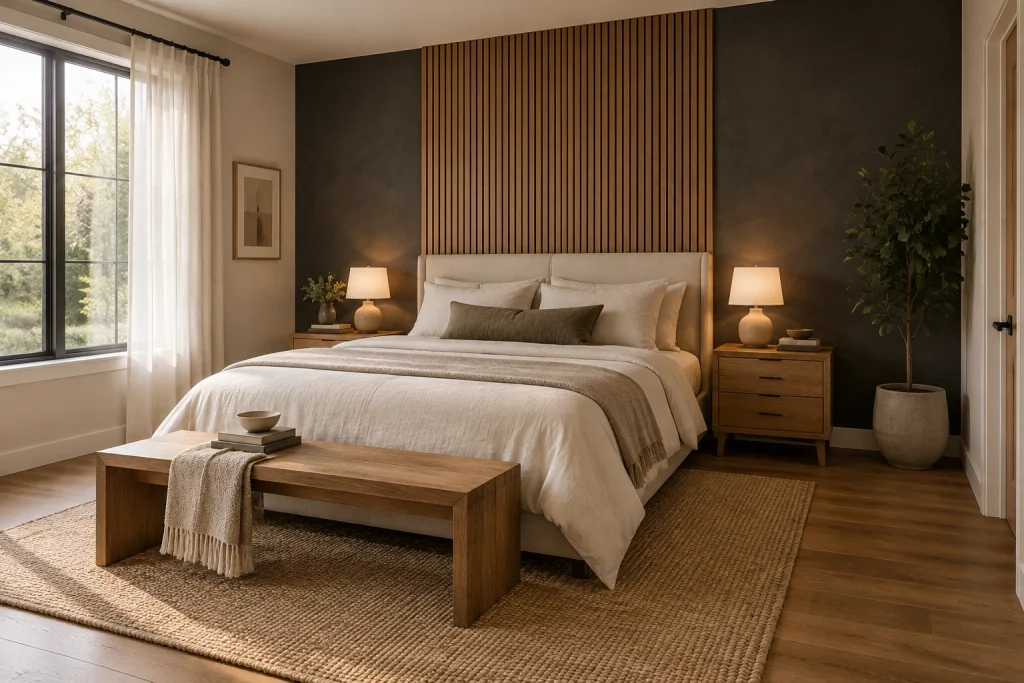
This moody-bedroom-accent-wall pairs broad charcoal panels with a centered field of narrow vertical oak flutes, giving the upholstered bed a clear architectural backdrop. The dark finish reaches almost wall to wall, while the warm wood insert rises behind the headboard and draws the eye upward. Cream bedding, a taupe throw, and a woven rug keep the contrast soft rather than stark. Matching wood nightstands sit beneath petite ceramic lamps, and the bench repeats the oak tone at the foot of the bed. Daylight enters through the large left-side window, filtered by sheer white curtains. A tall potted tree on the right adds a single organic silhouette against the charcoal.
Why it works: The centered wood panel creates a strong focal line, while charcoal adds depth and the pale textiles prevent the wall from feeling heavy.
- Charcoal textured wall finish
- Vertical oak slat panel
- Cream upholstered headboard and bedding
- Matching oak nightstands and bench
- Woven natural-fiber rug
Design tip: Center a slatted-wood section behind the headboard instead of covering the entire wall.
2. Use Deep Green Paneling to Organize a Compact Room
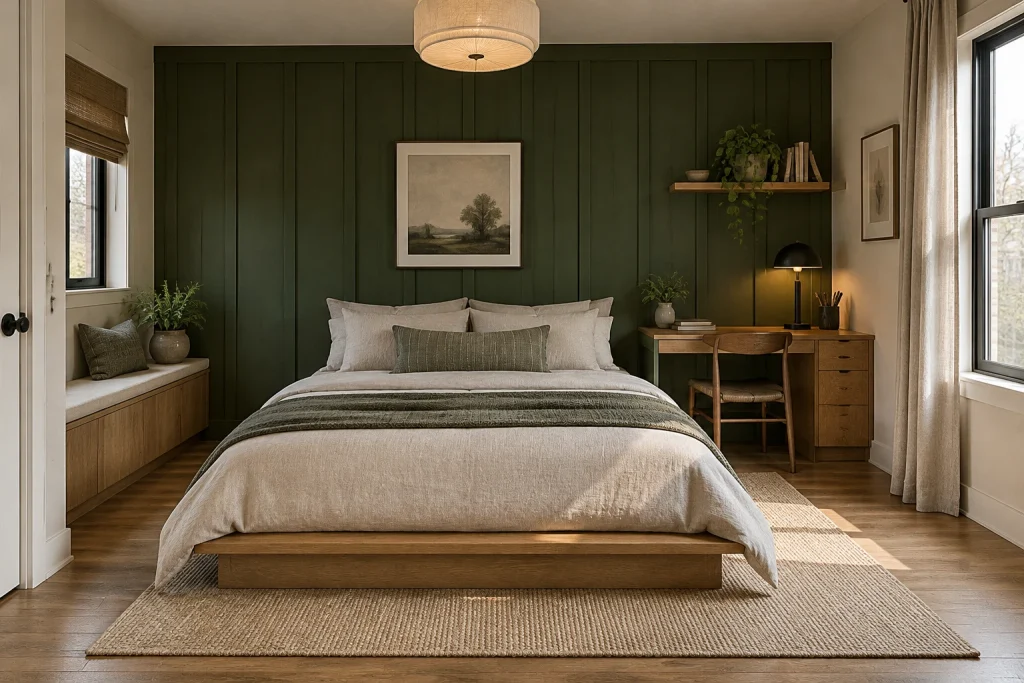
A full-height forest-green paneled wall gives this bedroom one continuous, grounded backdrop. Its narrow vertical grooves add rhythm without the visual busyness of a patterned finish. The low wood bed sits directly in front, layered with linen-colored bedding and a muted green striped blanket that connects back to the wall. On the right, an oak desk and wood chair nest alongside the bed, with a floating shelf and black task lamp above. On the left, a built-in wood window bench provides another useful surface beneath a small window. A larger window on the right, pale curtains, a woven shade, and a light woven rug soften the room’s darker anchor.
Why it works: The green paneling unifies the bed, desk, and bench wall, allowing several functions to read as one calm composition.
- Forest-green vertical wall paneling
- Low-profile oak bed frame
- Integrated wood desk and chair
- Built-in window bench
- Linen bedding and woven rug
Design tip: Repeat the accent-wall color in one textile, such as a blanket or lumbar pillow.
3. Pair Inky Navy Texture With Brass Lighting
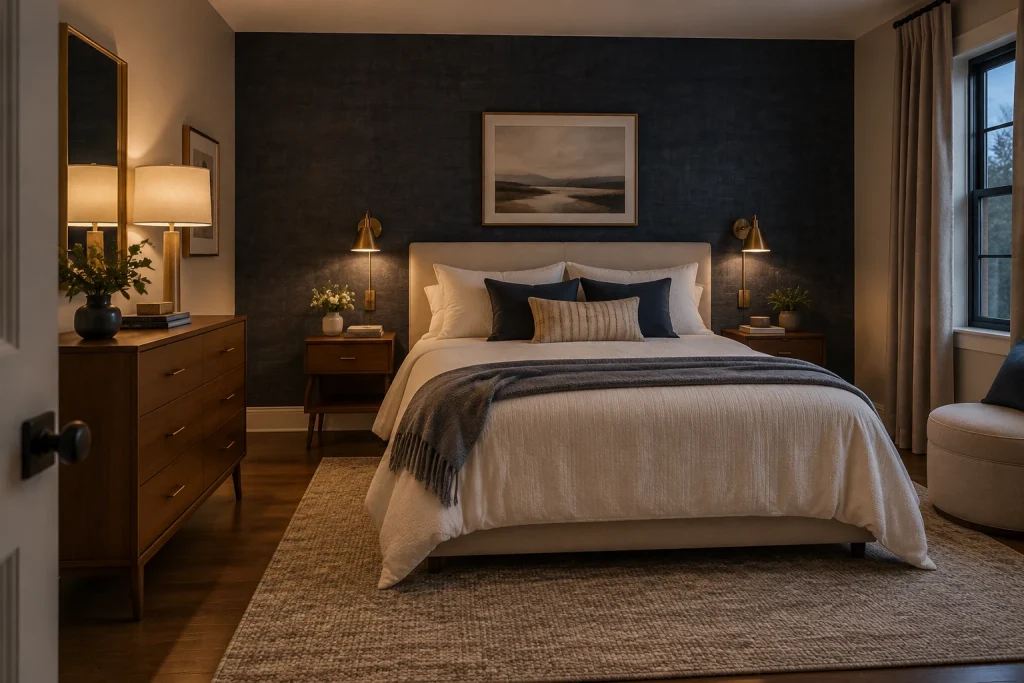
The nearly black navy accent wall sets a tailored, evening-toned mood behind the bed. Its subtle mottled texture is visible across the full wall, adding dimension without competing with the framed landscape centered above the headboard. Ivory bedding and a pale upholstered headboard create a crisp, light counterpoint, while two navy pillows and a charcoal throw echo the wall’s depth. Brass plug-in sconces flank the bed, adding warm pools of light and a slim metallic outline. Walnut furniture warms the darker palette: a low nightstand sits at the left of the bed, while a larger dresser occupies the near left wall. On the right, a rounded upholstered chair sits near the curtained window.
Why it works: Navy, walnut, and brass create tonal richness, while symmetrical lighting makes the dark feature wall feel composed rather than imposing.
- Textured deep-navy wall covering
- Warm brass bedside sconces
- Ivory bed linens
- Walnut dresser and nightstand
- Framed landscape artwork
Design tip: Use warm metal sconces on a navy wall to bring out its depth after daylight fades.
4. Soften Terracotta With Cane and Woven Texture
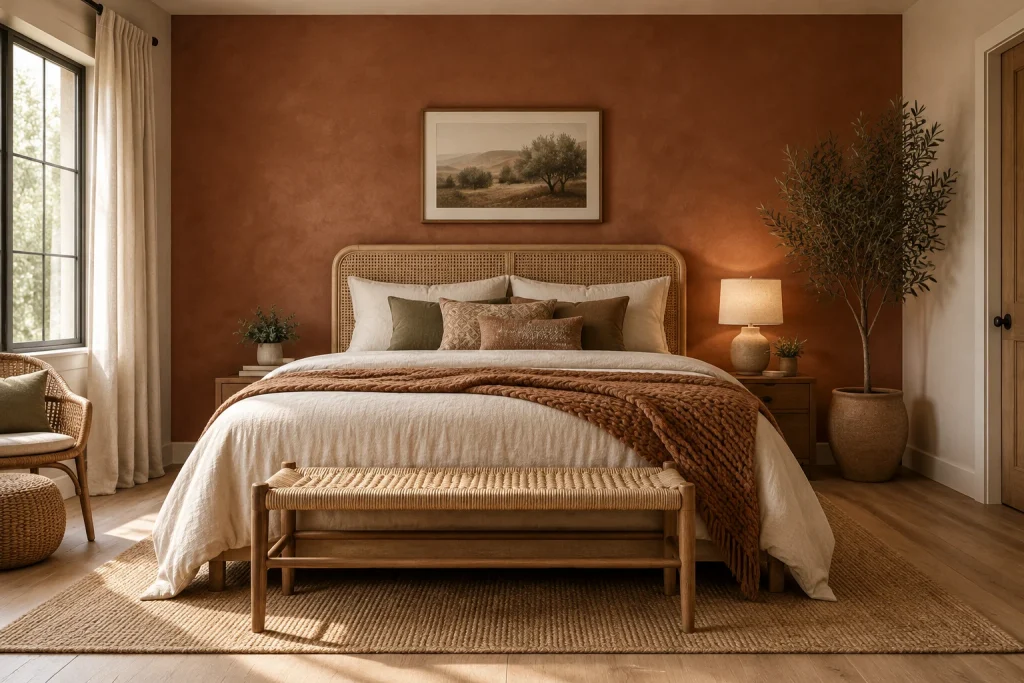
A warm terracotta plaster wall gives this bedroom its moody focal point, with tonal variation that keeps the color visually alive. The cane headboard introduces a lighter, open texture against that solid backdrop, and a softly colored landscape print bridges the two. Cream bedding brightens the bed, while olive and rust-toned pillows add restrained contrast. A chunky rust throw falls across one side, reinforcing the wall color without matching it exactly. At the foot, a low woven-rope bench sits on a large natural-fiber rug. A rattan chair and round woven ottoman appear beside the left window, while a tall potted tree and a small lamp balance the right side.
Why it works: The plaster-like wall supplies warmth and depth, while cane, rope, linen, and greenery keep the palette tactile and relaxed.
- Terracotta textured accent wall
- Cane headboard
- Cream linen bedding
- Woven-rope bench
- Natural-fiber rug and rattan seating
Design tip: Balance a saturated terracotta wall with cream bedding and light woven furniture.
1. Frame the Bed With a Black Built-In Alcove
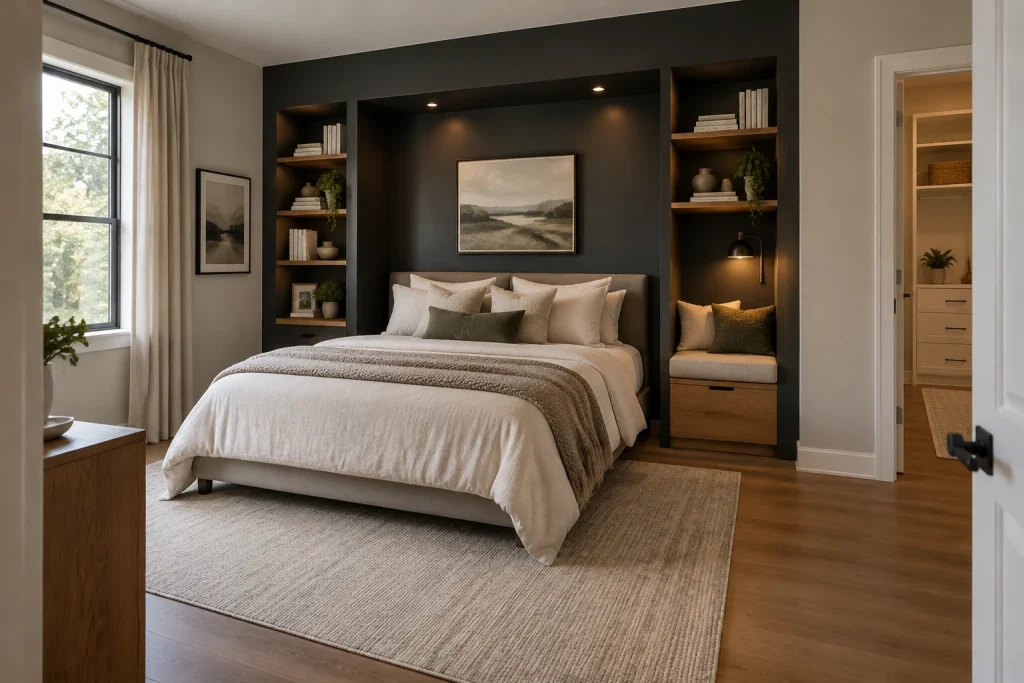
A moody-bedroom-accent-wall does not need to be a flat expanse of paint. Here, the near-black built-in surround gives the bed a deliberate, architectural frame, with recessed spotlights drawing attention to the center wall and landscape artwork. Open shelving on both sides breaks up the dark finish with pale book spines, small ceramics, framed pieces, and trailing greenery. On the right, the same built-in continues into a compact cushioned nook with a wood-fronted drawer and a slender black reading light. Cream bedding, a textured taupe throw, warm wood flooring, and a large pale rug keep the composition from feeling severe. A window with soft off-white curtains brings daylight to the adjacent wall, making the dark surround read as a focused backdrop rather than an all-over treatment.
Why it works: The deep built-in creates strong contrast around the bed while the shelves and lighting add depth, warmth, and useful visual rhythm.
- Near-black recessed bed surround
- Integrated open shelves with wood shelves
- Warm recessed and reading lights
- Cream bedding and textured taupe throw
- Pale area rug and warm wood floor
Design tip: Keep shelf styling spare: stack books in small groups and leave visible open space.
2. Let an Overscale Botanical Mural Set the Mood
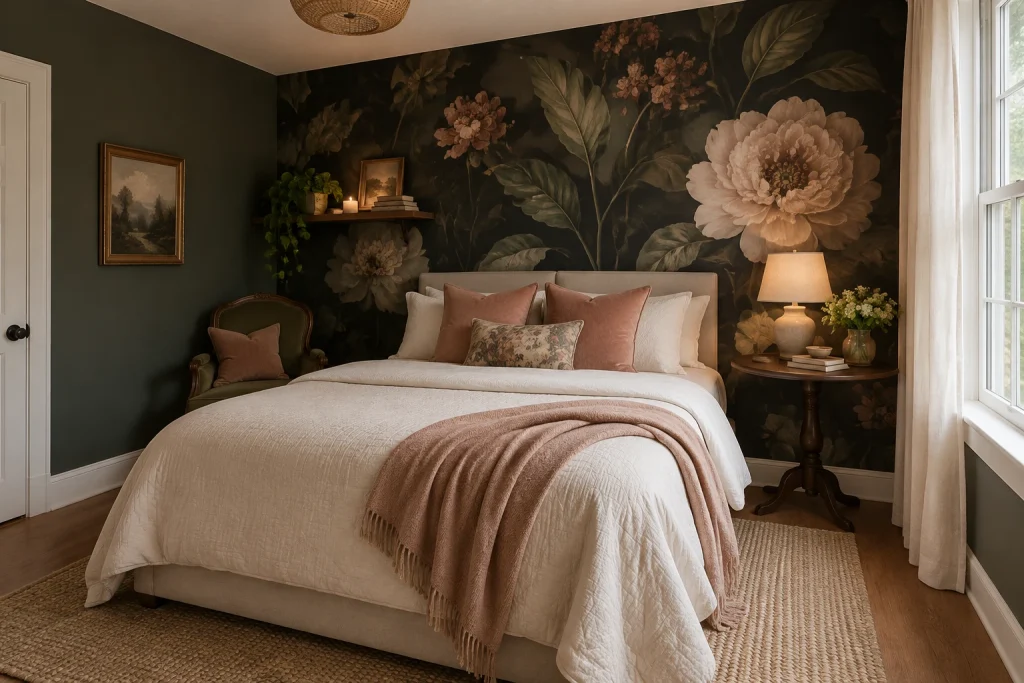
This bedroom uses a dark, full-wall botanical mural as its defining accent, placing a large blush flower, smaller blooms, and broad green leaves behind the bed. The mural’s inky ground carries across nearly the entire wall, while the adjacent wall stays a quieter deep green. That contrast gives the print room to feel dramatic without covering every surface. The bed is dressed in white, then softened with blush pillows, a botanical lumbar pillow, and a fringed blush throw that echo the mural’s flower tones. A dark wood pedestal table holds a ceramic lamp, books, and a vase of flowers; on the other side, a green upholstered chair, picture, and slim wood shelf add a collected, traditional note. White curtains at the window supply a crisp, light vertical edge.
Why it works: The mural supplies pattern and scale, while the restrained white bedding and repeated blush accents make its colors feel connected rather than busy.
- Dark botanical wall mural
- Large blush floral forms
- White bedding with blush textiles
- Dark wood pedestal table
- Deep green adjoining wall and upholstered chair
Design tip: Pull two or three colors from a mural for pillows and throws, then keep the larger bedding pieces plain.
3. Add Soft Drama With a Charcoal Upholstered Wall
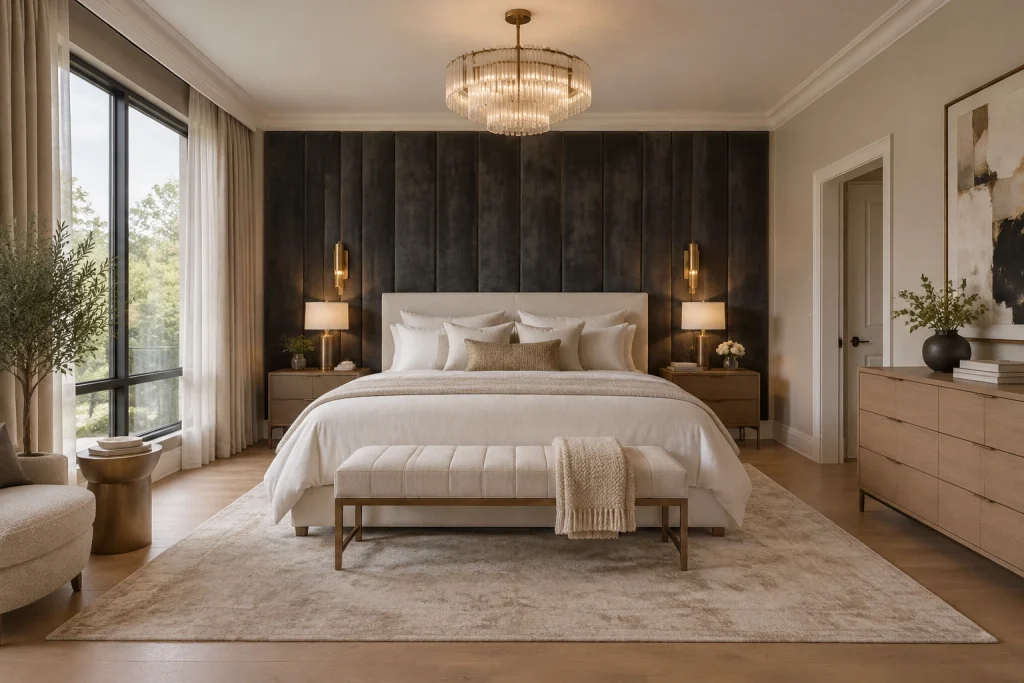
A floor-to-ceiling field of charcoal upholstered panels turns the wall behind the bed into a tactile moody accent. The tall, narrow panels create a tailored vertical grid, and their soft, mottled surface catches light differently from panel to panel. A light upholstered headboard and layered ivory bedding stand forward against the dark backdrop, while matching brass wall sconces and table lamps add symmetrical pools of warm light. The room’s lighter perimeter—white crown molding, pale walls, oak flooring, a broad pale rug, and full-height neutral curtains—keeps the dark wall contained to one strong focal plane. A channel-tufted upholstered bench at the foot and a low wood dresser continue the restrained mix of soft texture and warm finishes. The crystal-and-brass ceiling fixture adds another warm reflective note overhead.
Why it works: The dark fabric absorbs visual glare and gives the bed a crisp silhouette, while repeated ivory and brass details prevent the wall from feeling heavy.
- Floor-to-ceiling charcoal upholstered panels
- Light upholstered headboard
- Paired brass sconces and table lamps
- Ivory bedding and tufted bench
- Neutral drapery and pale rug
Design tip: Use vertical upholstered panels to make a wide bed wall appear taller and more structured.
4. Define the Bed Wall With Two-Tone Wainscoting
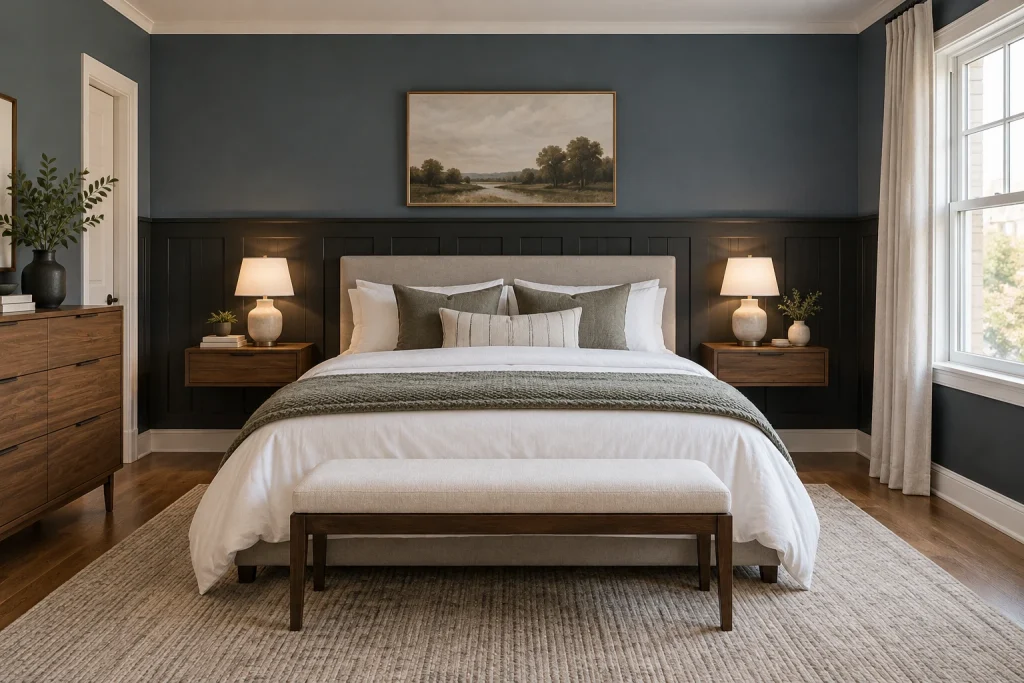
This accent wall pairs smoky blue paint above with matte black wainscoting below, using a horizontal rail to make the color shift feel intentional. The dark lower section is detailed with rectangular panel molding, adding shadow and texture behind the bed without introducing a busy pattern. White crown molding, baseboards, window trim, and door casing provide a clean outline around the moody palette. Centered above the upholstered headboard, a framed landscape occupies the blue field and balances the bed below. Floating walnut nightstands lend warmth on either side, each topped with a softly glowing ceramic lamp; their matching placement reinforces the wall’s symmetry. White bedding, gray-green pillows, a textured green throw, and a pale upholstered bench brighten the lower half of the composition, while a walnut dresser at left repeats the nightstand finish.
Why it works: The half-wall division grounds the bed, and the blue upper section preserves a sense of openness above the darker, more detailed paneling.
- Smoky blue upper wall
- Black paneled wainscoting
- Crisp white trim
- Floating walnut nightstands
- Centered landscape art and matching lamps
Design tip: Set the color break at a consistent rail height and align it cleanly across the entire wall.
1. Deep Plum With Light Wood and Soft White
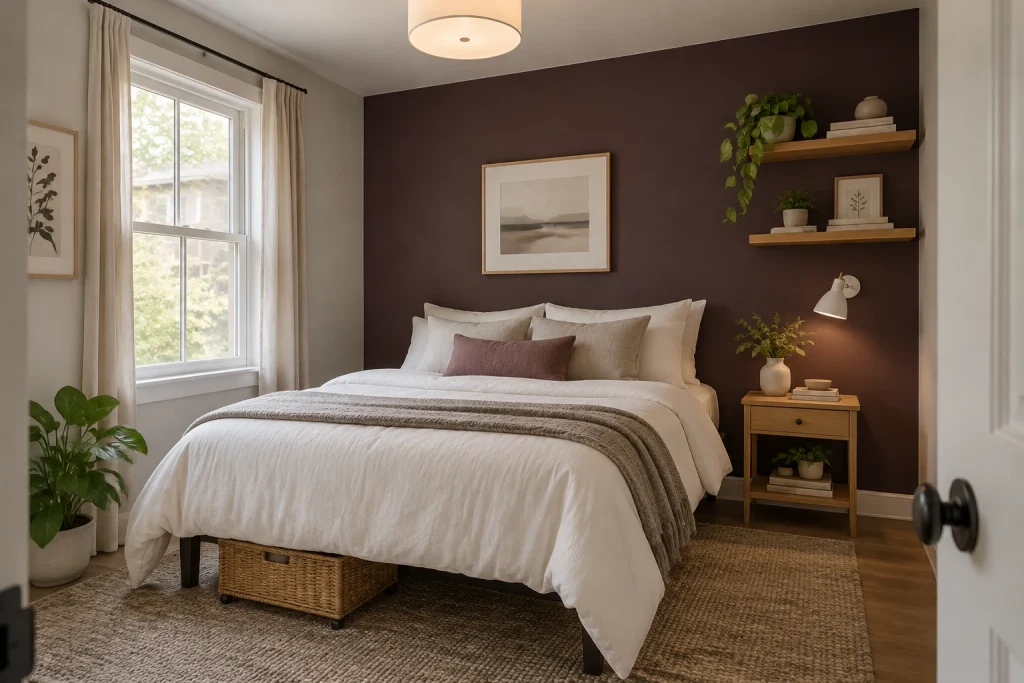
A deep plum accent wall gives this bed a strong, calm anchor without making the room feel closed in. The moody-bedroom-accent-wall treatment is balanced by crisp white bedding, pale layered pillows, and a textured taupe throw that soften the contrast. Two light-wood floating shelves keep the right side visually open while bringing in warm, natural color; their small books, pottery, framed botanical print, and trailing greenery add detail without crowding the wall. A compact white swing-arm reading light provides a focused glow beside the bed. Daylight from the large window at left, filtered through off-white curtains, keeps the dark backdrop legible. A wood nightstand, woven storage basket on casters, and nubby neutral rug extend the room’s tactile, approachable palette.
Why it works: The plum wall concentrates visual weight behind the bed, while white textiles, pale wood, and abundant daylight prevent the contrast from becoming heavy.
- Deep plum wall behind the bed
- White duvet and layered neutral pillows
- Birch-toned floating shelves
- Wall-mounted white reading lamp
- Woven rolling basket and textured rug
Design tip: Pair a dark wall with light bedding and one warm wood tone for a balanced contrast.
2. Slate Gray Under a Sloped Ceiling
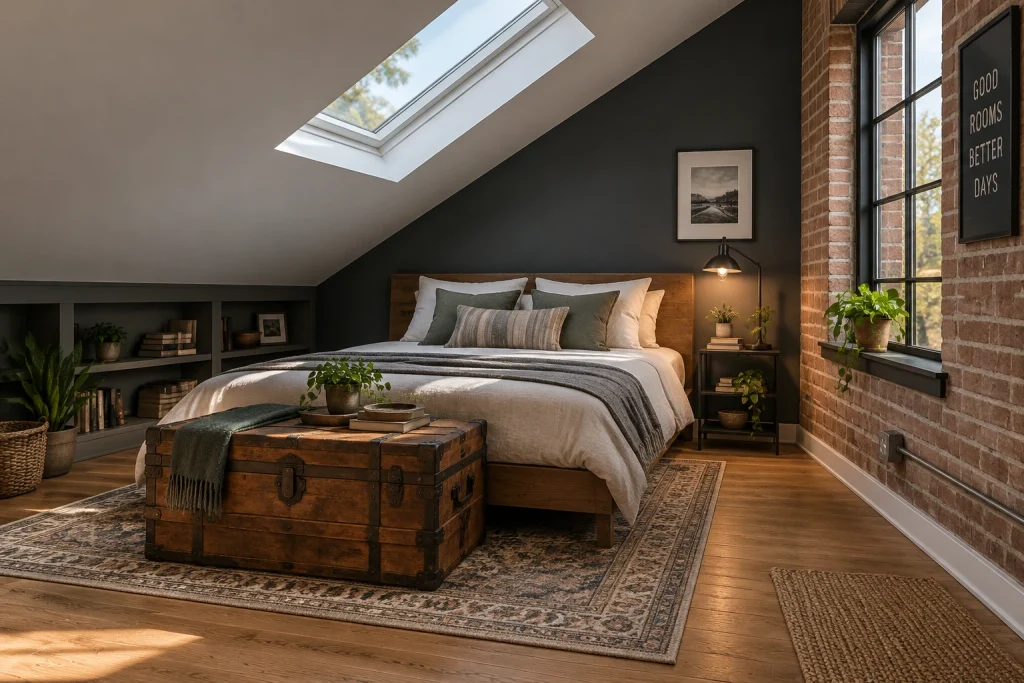
Here, a slate-gray accent wall turns the low, angled ceiling line into a deliberate backdrop for the bed. The dark color reaches from the headboard area up to the slope, visually gathering the sleeping zone into a defined nook. A wood headboard and platform frame bring warmth against the cool gray, while white bedding, charcoal-green pillows, and a gray striped throw repeat the room’s subdued palette. Overhead, the skylight introduces a bright diagonal of daylight; at right, tall black-framed windows illuminate the exposed brick wall and a leafy plant on the sill. The black metal nightstand and adjustable task lamp reinforce the industrial notes without adding bulk. At the foot, a weathered wood trunk with dark metal hardware layers in storage-like character, set over a patterned rug.
Why it works: The dark wall gives a complex roofline a clear focal point, and the mix of wood, brick, black metal, and pale bedding keeps the palette grounded and dimensional.
- Slate-gray wall beneath the slope
- Skylight above the bed
- Warm wood bed frame and headboard
- Exposed brick with black-framed windows
- Wood trunk with dark metal hardware
Design tip: Under a slope, let the accent color follow the architecture and keep bedside pieces visually slim.
Final thoughts
The most successful moody bedroom accent walls balance visual depth with lighter, warmer elements elsewhere in the room. Let the wall behind the bed carry the darkest finish, then offset it with ivory or linen-toned bedding, natural wood furniture, tactile rugs, and lighting that adds a warm glow. Whether the look is tailored with paneled charcoal, expressive with a botanical mural, or earthy with terracotta plaster, a focused accent wall can make the bedroom feel cozy, composed, and distinctly personal.