
A textured-boho-bedroom feels inviting because it layers materials with intention rather than simply adding more decor. Woven headboards, nubby rugs, fringed throws, rumpled linen, cane furniture, and earthy wood all bring dimension, while a focused palette keeps the room from feeling overly busy. Whether the look is light and coastal, deeply saturated, or pared back in neutral tones, these ideas show how to combine tactile surfaces, pattern, and practical pieces for a bedroom with warmth and personality.
1. Build Warmth With Tone-on-Tone Natural Fibers
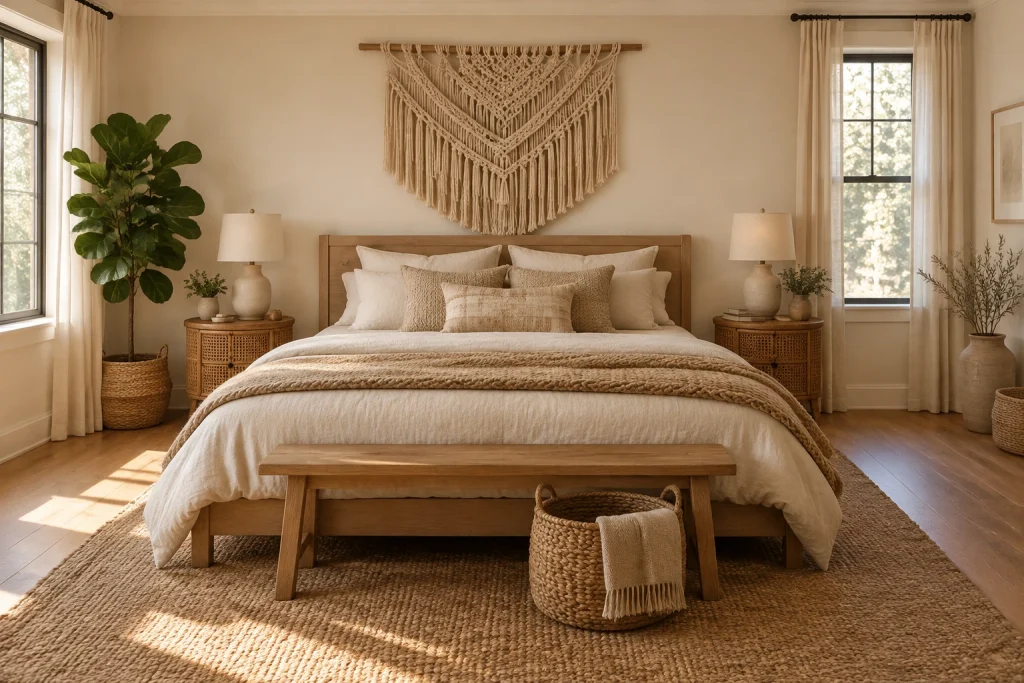
This textured-boho-bedroom keeps its palette intentionally close: cream bedding, sandy woven textiles, pale wood, and honey-toned flooring all sit within the same warm range. The texture does the visual heavy lifting. A large knotted macramé hanging creates a sculptural focal point above the wood bed, while the chunky area rug, ribbed throw, nubby pillows, cane nightstands, and woven floor basket introduce distinct surfaces without disrupting the calm. Full-length off-white curtains soften the two windows, and the leafy plant adds a strong organic silhouette. Even the simple wood bench continues the natural-material story rather than competing with it. The result is layered but composed, with each element contributing a different weave, grain, or tactile finish.
Why it works: Restricting color lets the varied fibers read clearly. The large wall hanging gives the bed wall scale, while repeated wood and woven finishes connect the furniture, rug, and accessories.
- Oversized cream macramé wall hanging
- Light wood bed and bench
- Cane-front round nightstands
- Chunky woven area rug
- Layered ivory, tan, and patterned bedding
Design tip: Use three to five textures in one neutral color family before adding a contrasting accent.
2. Let Deep Color Carry the Pattern Mix
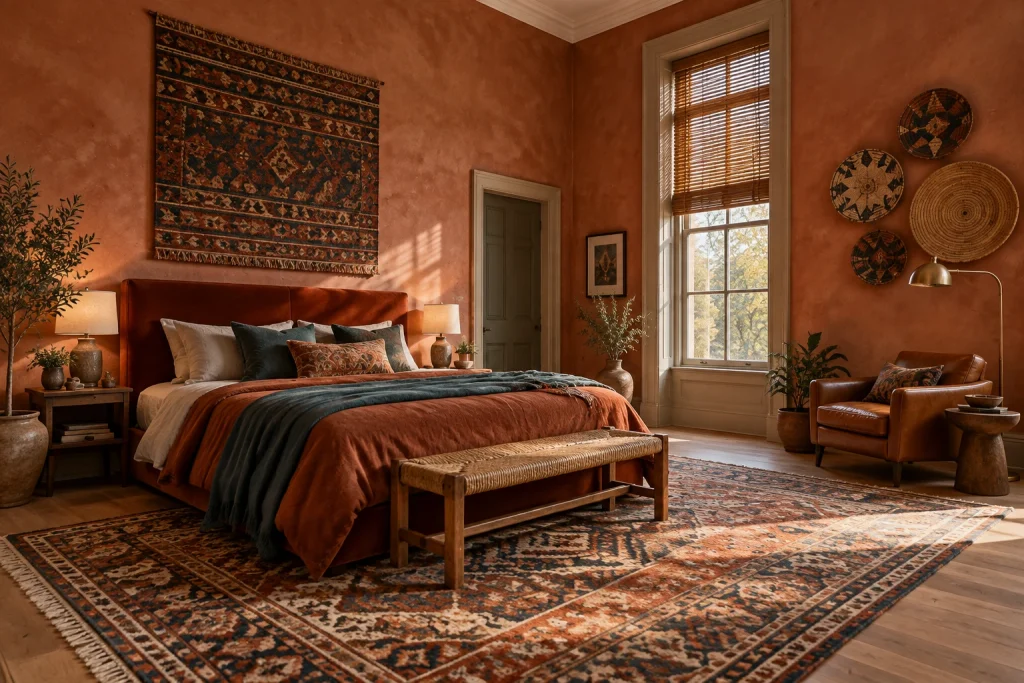
Here, clay-colored walls establish a saturated envelope for a more dramatic take on boho layering. The bed’s rust-toned upholstered headboard and coverlet pick up the wall color, while a deep teal throw supplies a cooler, weightier counterpoint. Pattern is concentrated where it has the most impact: a large textile above the bed, a lumbar pillow, and the expansive patterned rug underfoot. That repeat creates continuity rather than a scattered collection of motifs. A woven-seat bench brings in a lighter natural fiber at the foot of the bed, while the leather armchair, brass-toned floor lamp, and woven wall baskets vary the materials around the perimeter. Tall windows with woven shades add linear texture and cast patterned light across the room.
Why it works: The room uses a controlled mix of warm rust, dark teal, leather, wool-like textiles, and woven fiber. Repeating the rug’s dark accents in the wall textile and pillows makes the mix feel anchored.
- Clay-toned textured walls
- Rust upholstered headboard and bedding
- Deep teal throw and pillows
- Large patterned floor rug and wall textile
- Leather chair with woven wall baskets
Design tip: When mixing bold patterns, repeat at least one dark color across textiles and rugs to tie them together.
3. Make Vertical Storage Part of the Decor
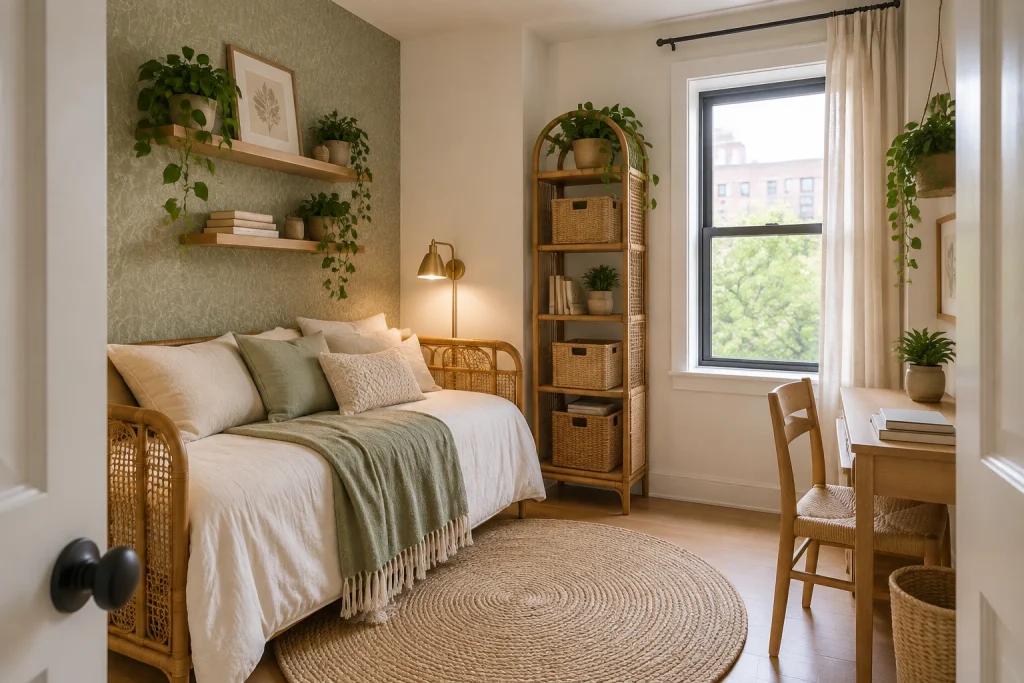
This compact sleeping area uses the wall and a narrow corner to add texture without crowding the floor. Behind the rattan daybed, a soft sage botanical-patterned wall covering sets a quiet backdrop for two slim floating shelves. Their small plants, books, and framed botanical print turn storage into a layered display. Beside the bed, a tall arched rattan shelving unit holds baskets, books, and more greenery, drawing the eye upward while keeping its footprint narrow. The round braided rug leaves a clear border of wood flooring visible, which helps define the bed zone without filling the entire room. White bedding, sage pillows, and a fringed green throw echo the backdrop, while a wood desk and woven-seat chair continue the natural finish across the window wall.
Why it works: The tall shelf and floating ledges use vertical space, while the circular rug and light bedding keep the lower half of the room visually open. Repeated rattan prevents the storage pieces from feeling separate.
- Sage botanical-patterned accent wall
- Two floating wood shelves
- Tall arched rattan shelving unit
- Round braided natural-fiber rug
- Rattan bed frame with white and sage bedding
Design tip: In a small bedroom, choose one tall open shelf and use matching baskets to keep visible storage orderly.
4. Pair Low Lines With a Few Strong Weaves
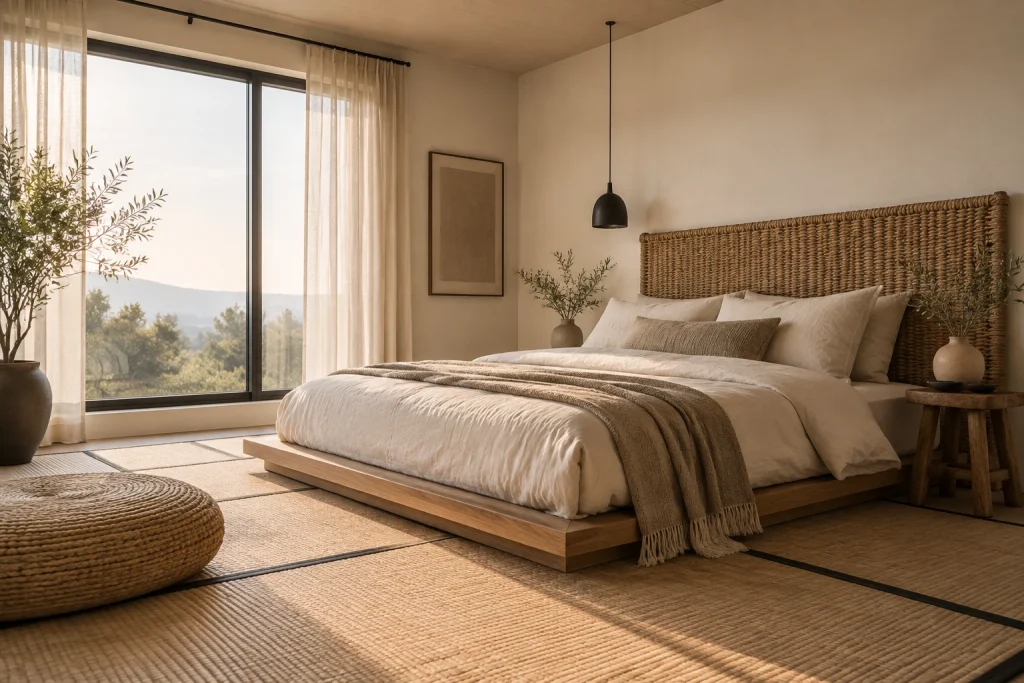
This room edits boho texture into a quieter, lower-profile composition. The platform bed sits close to the floor in pale wood, emphasizing the horizontal lines of the large window, layered floor coverings, and neatly draped taupe throw. Behind it, an oversized woven headboard provides the room’s dominant texture, its dense braid contrasting with the smooth white bedding and simple plaster-like walls. A large grid-edged woven floor covering grounds the bed, while a round braided cushion in the foreground introduces a second, more sculptural weave. The black pendant and dark borders on the floor covering bring definition without adding visual clutter. Sheer curtains filter the window, and small ceramic vessels with branches add restrained organic detail at either side of the bed.
Why it works: A limited set of materials—wood, linen-like bedding, woven fiber, ceramic, and black metal—creates contrast without excess. The low bed and broad floor textiles make the room feel visually grounded.
- Low pale-wood platform bed
- Oversized woven headboard
- Undyed white bedding with taupe fringed throw
- Large woven floor covering with dark grid edges
- Black pendant light and sheer curtains
Design tip: For a pared-back boho look, choose one oversized woven statement piece and keep surrounding patterns minimal.
1. Coastal Layers in Seafoam and Sand
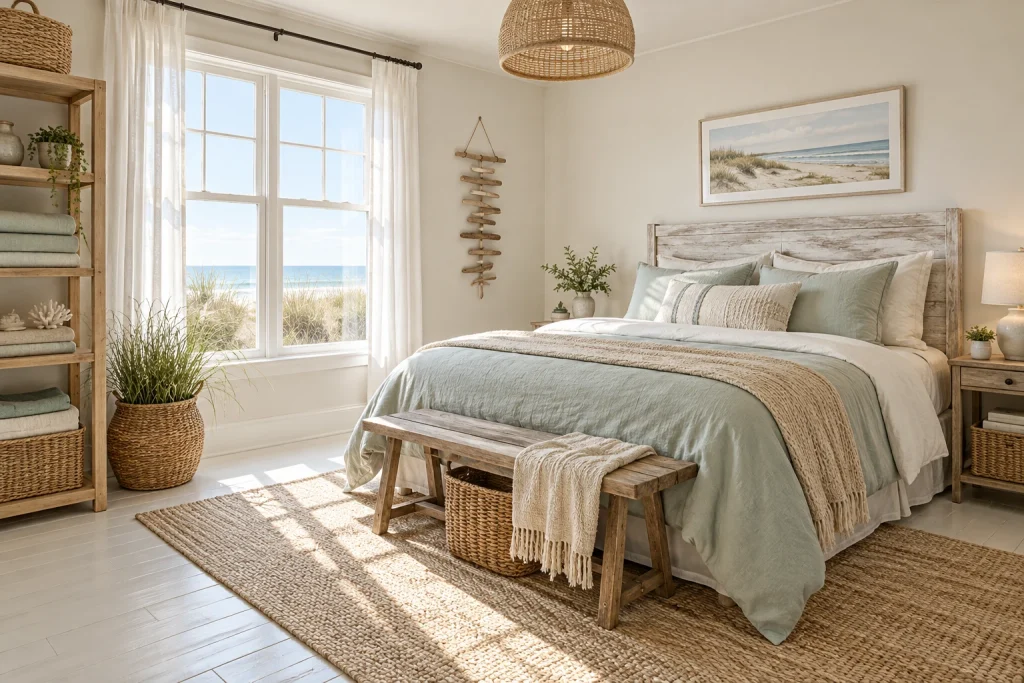
This textured-boho-bedroom pairs a softly weathered wood bed with a pale seafoam coverlet, white sheets, and a sand-colored throw layered across the foot. A small lumbar pillow introduces fringe and narrow tonal stripes without disrupting the restrained palette. Underfoot, a nubby natural-fiber rug repeats the woven texture of the baskets, the plant container, and the broad woven pendant shade. The room’s wood pieces stay intentionally varied: a rustic bench, open shelving, and a nightstand all bring grain and a sun-faded look. Sheer white curtains soften the large windows, while driftwood-style wall art and a framed shoreline image reinforce the coastal direction. Folded bedding, ceramics, coral-shaped decor, and greenery make the open shelf feel composed rather than bare.
Why it works: The limited seafoam, white, and natural-fiber palette lets tactile variation do the visual work. Repeating woven materials connects the ceiling, floor, storage, and bed without making the room feel busy.
- Seafoam coverlet with white bedding
- Fringed sand-toned throw and lumbar pillow
- Natural-fiber rug and woven baskets
- Weathered wood bed and bench
- Sheer curtains with driftwood-style wall decor
Design tip: Use one muted color in the bedding, then repeat natural woven fibers at three different heights.
2. Pattern on Pattern, Anchored by Warm Wood
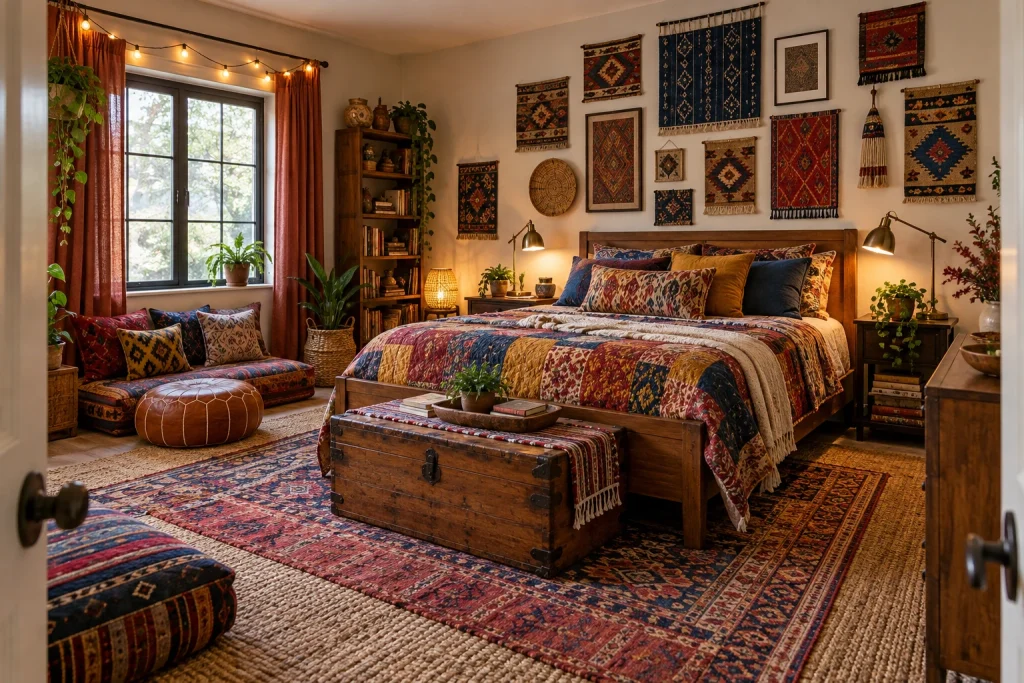
This room takes a generous, collected approach to layered textiles. A patchwork quilt in saffron, berry, rust, and indigo covers the wood bed, while mixed patterned pillows build a dense focal point at the headboard. A cream throw with fringe provides a needed solid pause over the color. Below, a large patterned rug sits over a chunky natural-fiber rug, creating two distinct layers under the bed and trunk. The wall becomes a textile gallery, with small woven hangings, a larger indigo panel, fringe, and a few framed pieces arranged above the headboard. A low floor cushion, a patterned upholstered floor seat, and a leather pouf add flexible-looking seating near the window. Dark wood furniture, plants, and warm lamps ground the color and pattern.
Why it works: The room repeats a tightly related range of rust, berry, mustard, and indigo across the quilt, rugs, seating, and wall textiles. Solid wood and neutral woven fibers prevent those patterns from competing unchecked.
- Patchwork quilt and mixed patterned pillows
- Layered patterned and natural-fiber rugs
- Textile gallery wall with fringe
- Leather pouf and low patterned seating
- Wood trunk used at the foot of the bed
Design tip: For a layered rug look, place the bolder patterned rug on a larger, quieter natural-fiber base.
3. Soften a Black Wall With White Textiles
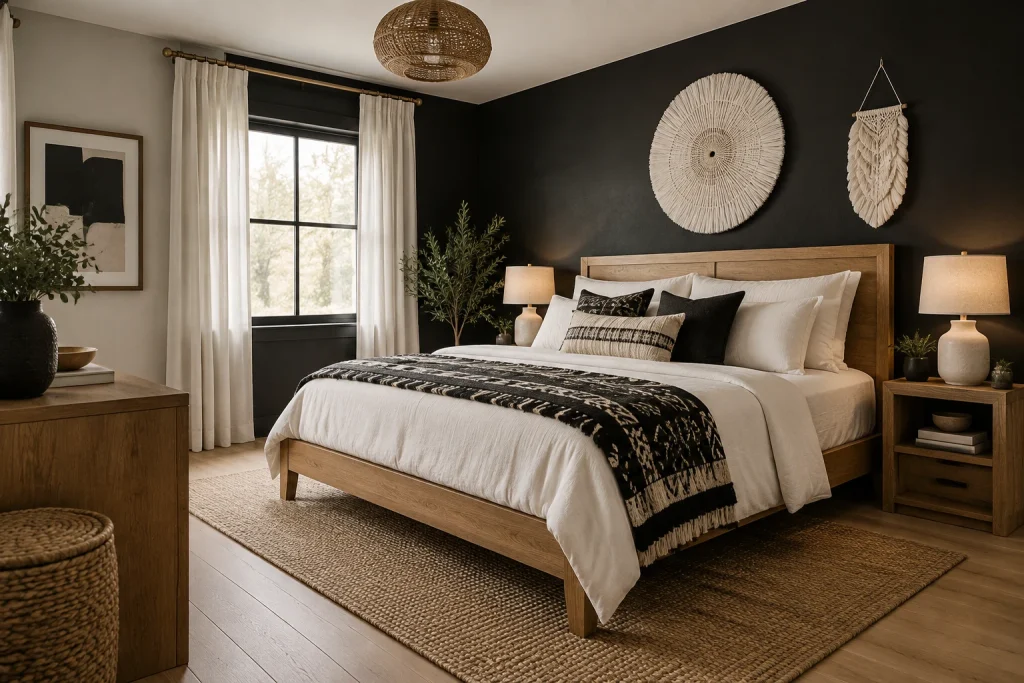
A matte black wall gives this bedroom its graphic structure, but the visible materials keep it from reading severe. The bed is layered in white bedding, generously sized white pillows, a black accent pillow, and a black-and-cream patterned throw with fringe. Its light wood frame and matching wood nightstands introduce warmth against the dark wall. Above the headboard, a large round woven wall piece and a smaller fringed hanging add pale, tactile relief at eye level. A woven pendant, thick neutral rug, basket in the foreground, and light-filtering white curtains continue the natural texture. Even the bedside styling follows the palette: warm ceramic lamps, dark planters, small greenery, and stacked books maintain a balanced mix of black, white, wood, and fiber.
Why it works: High contrast supplies clarity, while soft white fabric and woven pieces break up the expansive black surface. The repeated warm wood prevents the graphic palette from feeling cold.
- Matte black feature wall
- White bedding with black-and-cream fringed throw
- Light wood bed and nightstands
- Round woven wall decor and macramé hanging
- Neutral woven rug, basket, and pendant
Design tip: When using a black feature wall, place large pale textile or fiber pieces on it to create contrast without adding more color.
4. Build Quiet Texture With Earthen Surfaces
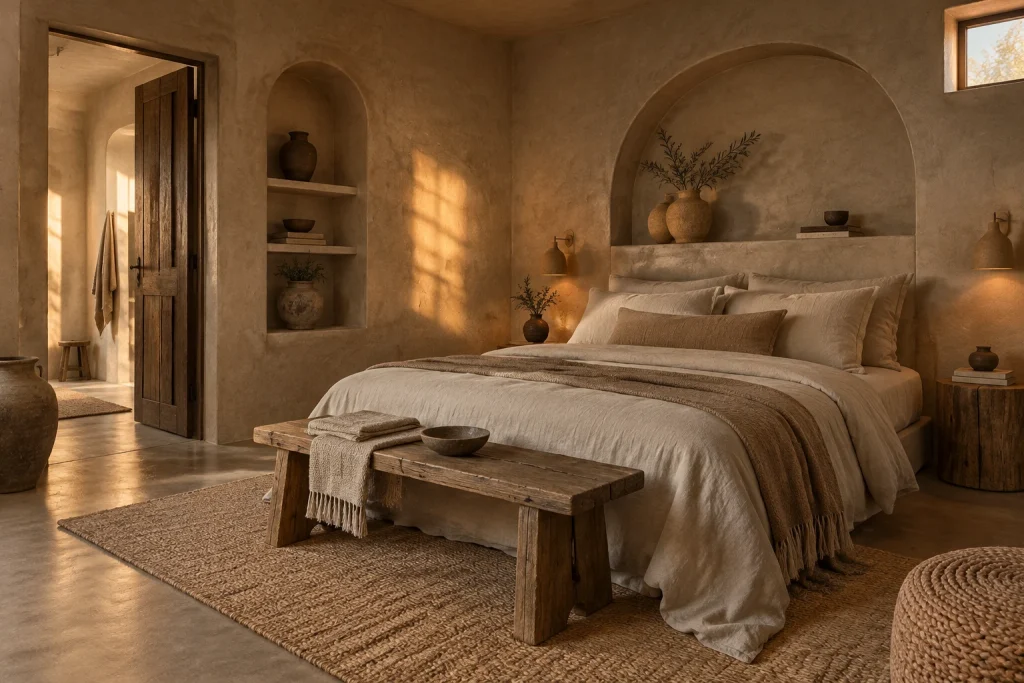
This bedroom relies on closely related earthen tones rather than pronounced color contrast. The walls and arched niches have a visibly mottled, hand-worked finish that gives the entire backdrop depth. An inset arch behind the bed doubles as a ledge for rounded ceramic vessels, leafy branches, and a small stack of books. The bed continues the tonal layering with rumpled pale linen, taupe pillows, and a deep brownish-tan throw with fringe. A thick, low natural-fiber rug grounds the bed, while a rough wood bench crosses its foot, holding folded textiles and a simple bowl. More imperfect-looking forms appear in the large floor vessel, the tree-stump side table, and the textured ceramic pieces on shelves and tables. Small wall-mounted sconces create warm pools of light on the clay-colored surface.
Why it works: A narrow range of clay, beige, brown, and natural linen makes the textured plaster, woven rug, raw wood, and ceramics feel cohesive. Arched recesses add architectural texture without requiring a crowded wall display.
- Mottled clay-colored walls and arched niches
- Rumpled pale linen bedding
- Fringed taupe-brown throw
- Raw wood bench and stump side table
- Rounded ceramic vessels and natural-fiber rug
Design tip: Keep an earth-toned room dimensional by mixing smooth linen, rough wood, woven fiber, and matte ceramics in the same color family.
1. Let a Woven Headboard Set the Texture Mix
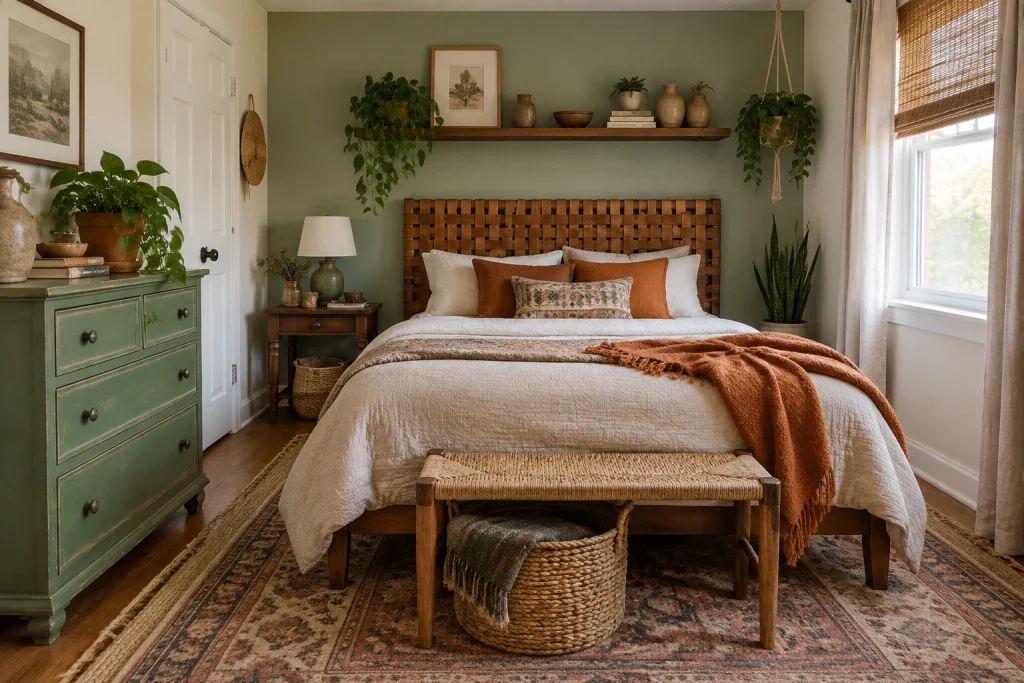
This textured-boho-bedroom uses a broad woven-wood headboard as its most graphic surface, giving the bed a strong warm-brown anchor against a muted green wall. Texture accumulates in measured layers: a lightly crinkled ivory coverlet, rust-toned pillows and throw, a patterned lumbar pillow, and a patterned rug beneath the bed. The painted green dresser adds another softened, timeworn-looking finish, while the wood nightstand, woven bench, and two woven baskets repeat the natural-fiber note without matching exactly. Above, a dark floating shelf holds earthy vessels, stacked books, framed art, and trailing plants. The result feels collected because wood, fabric, pottery, and foliage each bring a distinct surface quality to the same restrained palette.
Why it works: The room balances its richer materials with generous ivory bedding and a calm wall color. Repeating rust, green, brown, and woven fibers makes the varied pieces read as one composition rather than a series of unrelated accents.
- Woven wood headboard
- Muted green painted wall and dresser
- Crinkled ivory bedding
- Rust throw and pillows
- Patterned rug with a woven bench
Design tip: Choose one oversized woven element, then echo its tone in two or three smaller pieces.
2. Soften a Low Ceiling With Grounded Layers
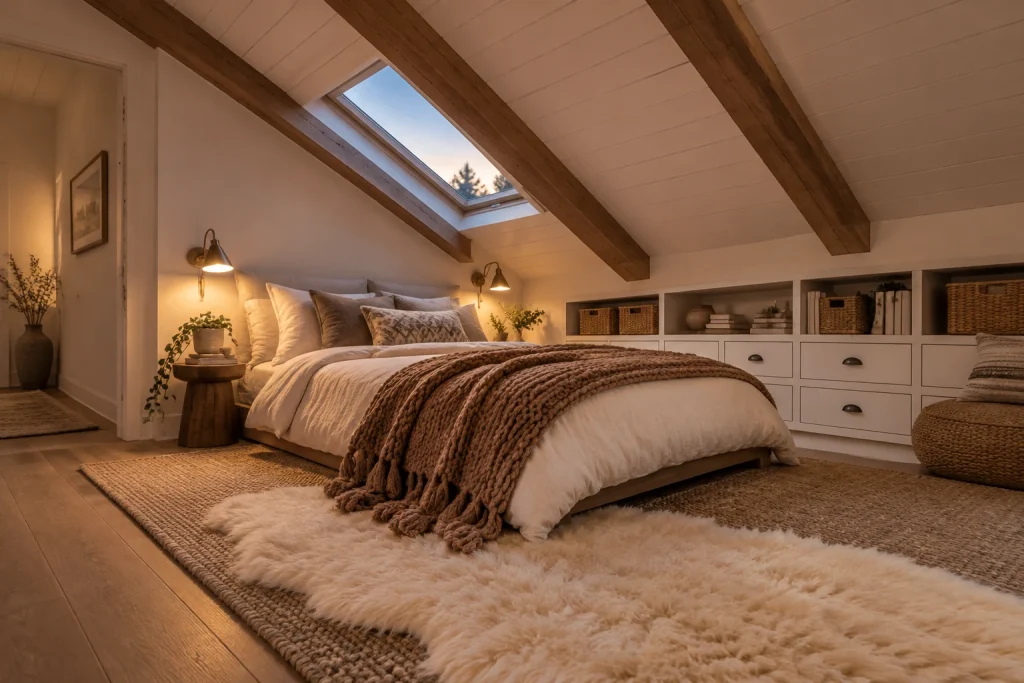
A sloped white ceiling, exposed wood beams, and a skylight establish the architecture of this warm, low-profile bedroom. Rather than competing with those angles, the bed stays close to the floor and is layered in soft white bedding, taupe and patterned pillows, and a thick brown knitted throw with long fringe. Underfoot, a large woven area rug is topped with an irregular white sheepskin-style layer, creating contrast between coarse and plush textures. Along the low wall, white built-in cabinetry combines drawers with open cubbies holding woven baskets, books, small vessels, and plants. Brass-toned wall sconces at the bed and a small wood stump table bring compact, grounded details to the composition. The palette remains narrow, allowing weave, pile, knit, wood grain, and paneled ceiling boards to carry the visual interest.
Why it works: The low bed preserves open visual space beneath the sloped ceiling, while horizontal built-ins follow the room’s lowest edge. A limited range of white, taupe, and wood tones keeps the many textures from feeling busy.
- White paneled sloped ceiling
- Exposed wood beams and skylight
- Low-profile bed
- Chunky fringed knit throw
- Built-in drawers and woven storage baskets
Design tip: In a low-ceiling room, keep the bed profile low and add texture through rugs and throws instead of tall furniture.
Final thoughts
The most successful boho bedrooms balance softness with structure. Start with one or two defining textures—such as a woven headboard, patterned rug, plaster-like wall, or textile hanging—then repeat complementary natural materials through bedding, storage, lighting, and accents. Keep the color story connected, vary the scale of patterns and weaves, and leave some visual breathing room around the bed. The result is a textured-boho-bedroom that feels collected, comfortable, and cohesive.


