Outdoor rug styling for covered patios is less about filling every inch of floor and more about giving each outdoor activity a clear place. A well-scaled rug can anchor a dining table, pull a sectional into a lounge, soften a play corner, or guide the path from an outdoor kitchen to the table. In smaller yards, balconies, and courtyards, the shape matters as much as the color: round rugs interrupt long, narrow layouts, rectangular rugs organize seating, and runners create direction without crowding the floor. These ideas show how to use texture, pattern, layering, and visible floor space to make an outdoor setup feel intentional.
1. Ground a Farmhouse Dining Setup With Natural Texture
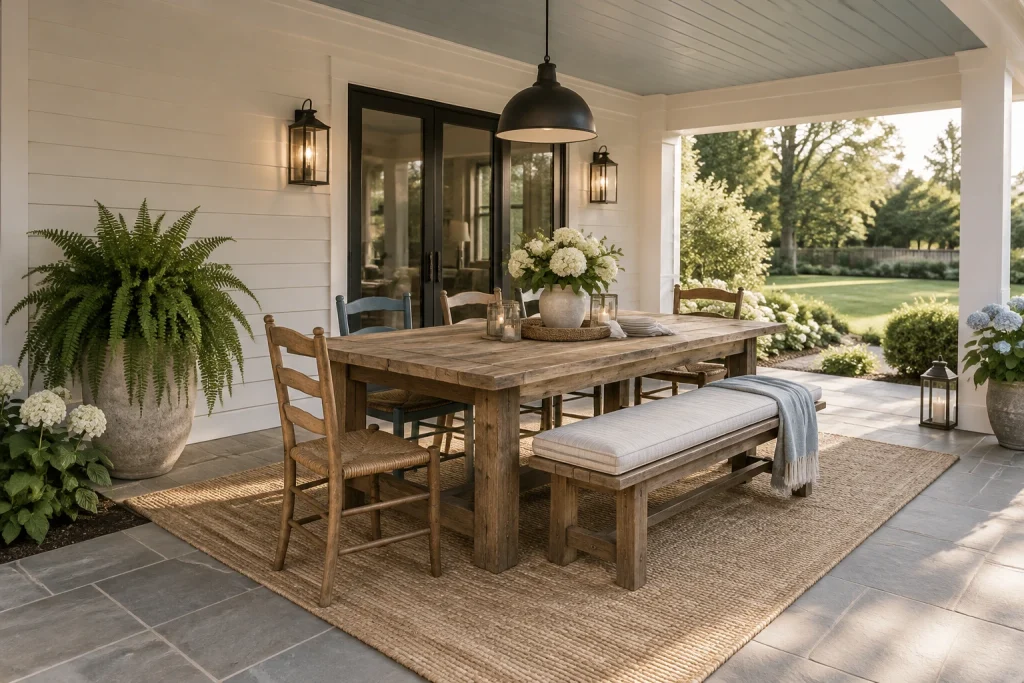
For outdoor-rug-styling-for-covered-patios, this dining porch shows the value of one generously sized, natural-toned rug. The rectangular woven rug runs beneath the reclaimed-wood table, ladder-back chairs, and long upholstered bench, making the mixed seating read as one deliberate group. Its warm, nubby surface softens the gray tile without competing with the white shiplap, black-framed doors, or black dome pendant. A muted blue chair and a blue-gray throw add quiet contrast, while the fern and pale flowering plants keep the edges from feeling bare. Most importantly, the rug extends well beyond the table, so the furniture feels centered rather than perched on a small island.
Why it works: The low-contrast rug establishes a broad dining zone, while its texture supports the porch’s relaxed wood-and-woven mix.
- Large rectangular natural-fiber-look rug
- Reclaimed-wood rectangular dining table
- Mixed wood and painted ladder-back chairs
- Upholstered bench with blue-gray throw
- Black dome pendant and wall lanterns
Design tip: Choose a rug wide enough that pulled-back dining chairs remain on it.
2. Use a Round Rug to Organize a Narrow Balcony
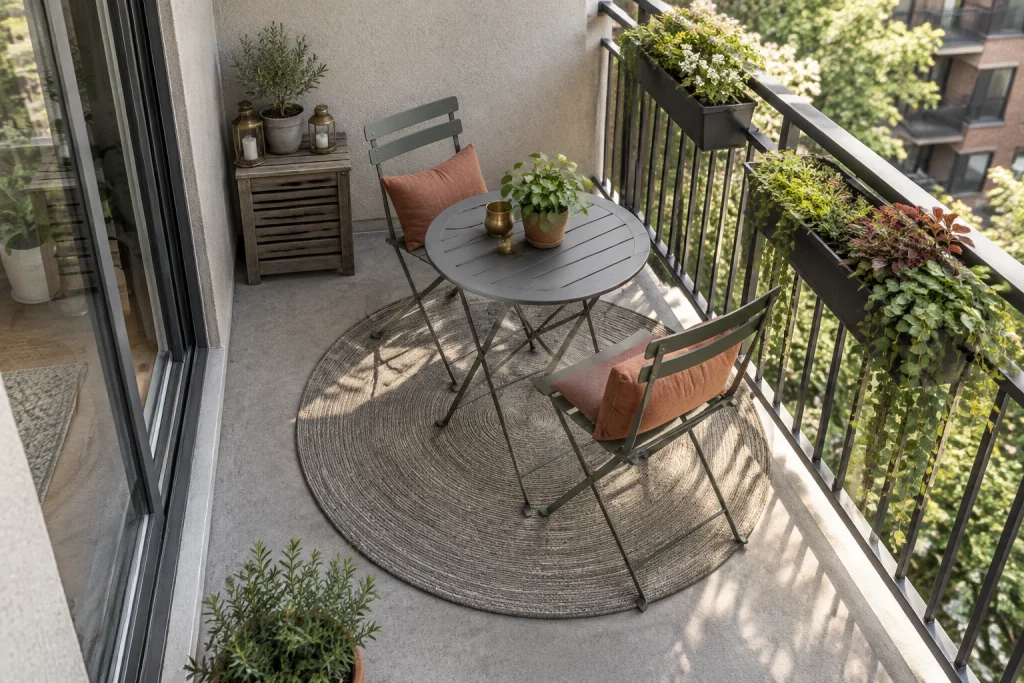
A round rug is an especially effective answer for a compact balcony because it breaks up the corridor-like shape of the concrete floor. Here, the slate-gray circular rug holds a small round bistro table and two slim folding chairs in a single, compact conversation zone. Its concentric woven pattern echoes the tabletop’s curved outline, creating definition without adding a bold color block. Muted terracotta pillows warm up the dark green-gray chairs, while black railing planters create a planted border along one side. A weathered wood slatted cabinet, potted plant, and small brass-toned lanterns furnish the far end without taking over the central rug. The clear floor beside the sliding door keeps the arrangement visually open.
Why it works: Repeating circular forms makes the small table setting feel intentional, and the rug visually separates it from the balcony’s circulation edge.
- Round slate-gray woven rug
- Round folding bistro table
- Two folding metal chairs
- Terracotta seat pillows
- Black railing planters with trailing greenery
Design tip: Center a round rug under a round table, then keep the door-side floor clear.
3. Layer Rugs to Give a Patio Lounge More Depth
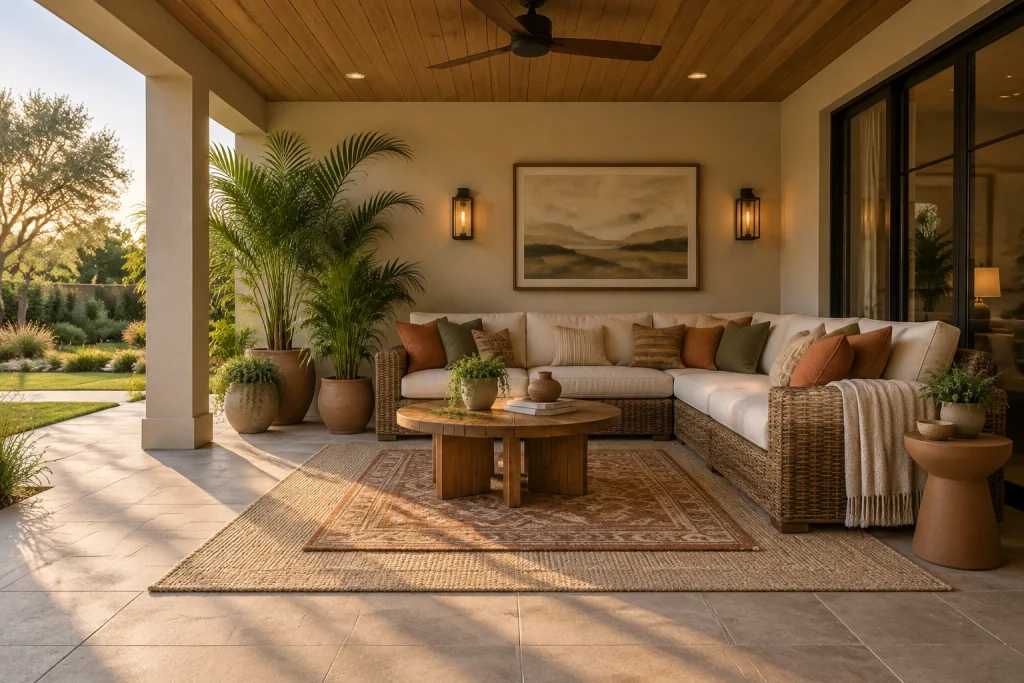
This covered patio uses two rugs to make a large sectional seating area feel more composed. A substantial neutral woven base rug establishes the outer boundary beneath the L-shaped wicker sectional and round wood coffee table. On top, a smaller terracotta-and-cream patterned rug concentrates color and pattern directly beneath the table, drawing attention to the center of the lounge. The layered approach works with the cushions in clay, olive, cream, and rust rather than matching them exactly. Around the rugs, the exposed tile remains visible at the front and along the open side of the patio, preserving a clear visual margin. Tall potted palms on the left and a compact sculptural side table on the right frame the seating zone without interrupting it.
Why it works: The larger rug gives the sectional a unified footprint, while the smaller patterned layer creates a focused coffee-table moment.
- Large neutral woven base rug
- Smaller terracotta patterned flatweave
- L-shaped wicker sectional with light cushions
- Round wood coffee table
- Clay, olive, and rust accent pillows
Design tip: Layer a smaller patterned rug at the coffee table, keeping its edges inside the larger rug.
4. Let Stripes Set the Rhythm on a Screened Porch
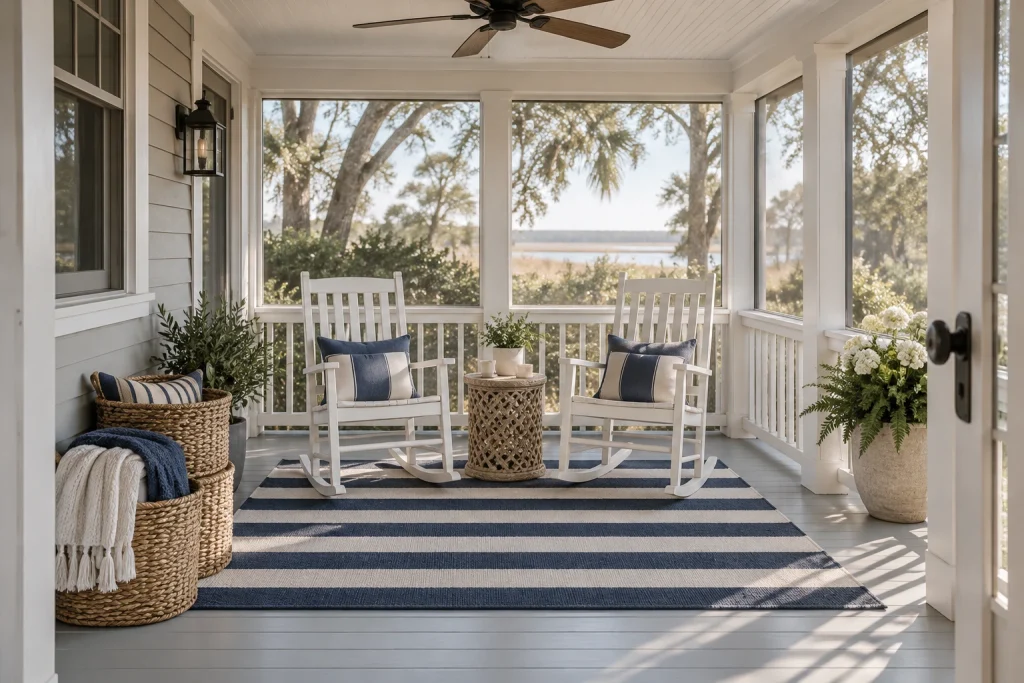
A navy-and-white striped outdoor rug gives this screened porch a crisp coastal foundation without overwhelming its white painted floor, walls, and rocking chairs. The broad horizontal bands visually widen the seating area and neatly contain the two white wooden rockers and woven round side table. Navy-and-white pillows repeat the rug’s palette at chair height, creating a simple link from floor to furniture. On the left, woven baskets filled with folded throws introduce a softer natural texture; on the right, a large planter with white flowers and fern-like greenery fills the corner. The rug stops short of the doorway and leaves visible floor around the perimeter, which keeps the compact porch from feeling wall-to-wall or crowded.
Why it works: The strong stripe supplies structure, while the white furniture and woven accessories keep the navy palette light and relaxed.
- Blue-and-white striped rectangular rug
- Pair of white wooden rocking chairs
- Round woven side table
- Navy-and-white lumbar pillows
- Woven baskets with folded throws
Design tip: Leave a border of visible porch flooring around a striped rug to keep the pattern from feeling heavy.
1. Ground a Courtyard Seating Area With a Patterned Rug
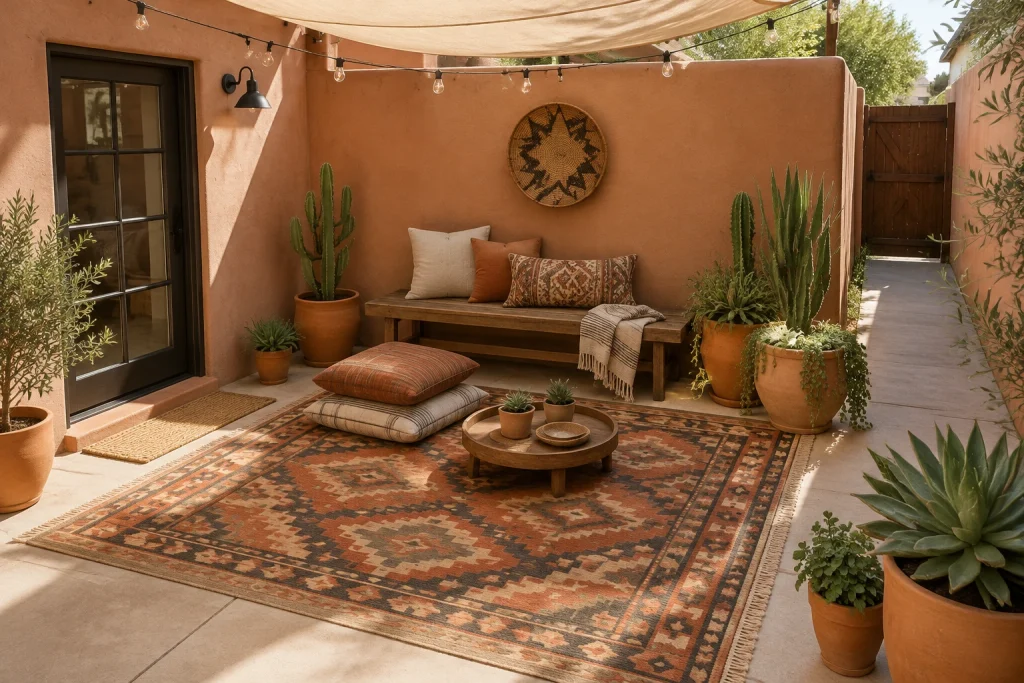
A large flatwoven rug turns this compact stucco courtyard into a defined open-air sitting area. Its terracotta, cream, and deep charcoal geometric pattern echoes the clay walls and terracotta planters without disappearing into them. The rug is positioned squarely in front of the long wood bench, with stacked floor cushions and a low round tray table placed over its center. That arrangement keeps the furniture visually low and allows the textile to remain the focal layer. A slim strip of bare paving runs along the right side toward the wood gate, while the planted pots stay grouped at the rug’s perimeter rather than crowding its edges. Overhead string lights and the shade cloth lend softness above the more graphic floor pattern.
Why it works: The rug gives low, movable seating a clear boundary, while its warm palette connects the bench, pillows, pots, and stucco surroundings.
- Terracotta-and-charcoal geometric flatweave
- Long wood bench with neutral and patterned pillows
- Stacked floor cushions
- Low round tray table
- Terracotta pots with cacti and succulents
Design tip: Leave one side of the rug uncovered to preserve an easy walking route.
2. Let One Rectangular Rug Organize an L-Shaped Bench
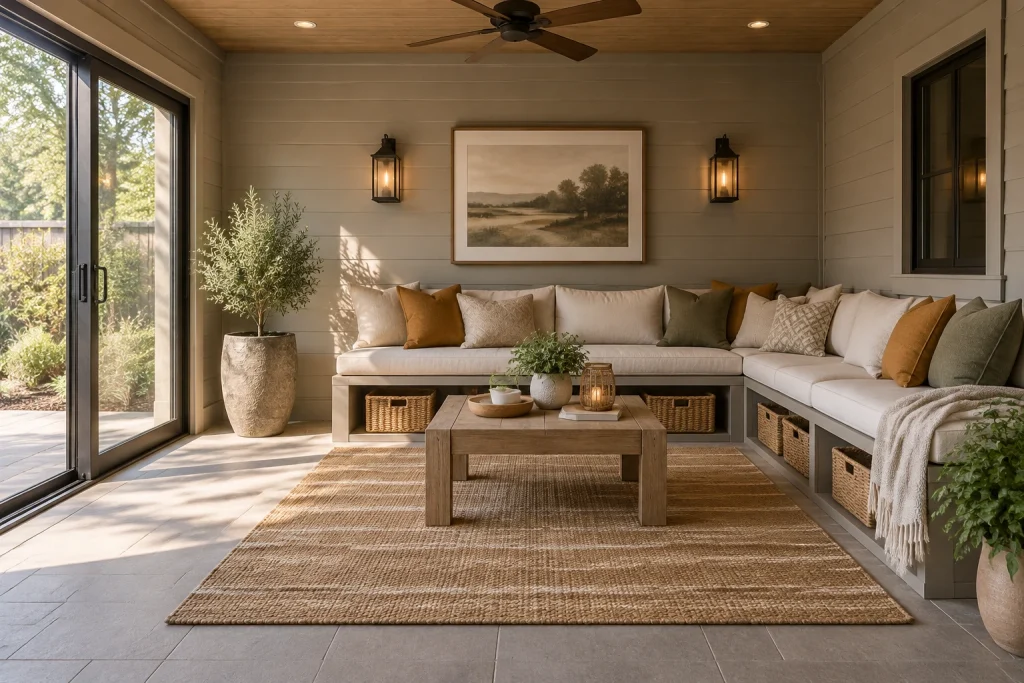
Here, a warm tan rug with a subtle ivory grid establishes the center of a covered patio furnished with an L-shaped built-in bench. It extends beyond the square wood coffee table on all visible sides, making the table feel centered within the conversation zone rather than stranded on the tile. The bench follows the back and right walls, while woven baskets fill its open lower cubbies; this repetition of texture makes the rug’s natural woven surface feel intentional. Cream seat cushions are layered with ochre, sage, and patterned pillows, adding depth against gray-green shiplap walls. A tall potted tree at the left and a leafy planter at the front right soften the built-in geometry without intruding on the rug. The open tile between the rug and sliding door keeps the entry side visually clear.
Why it works: A generously scaled rectangular rug balances the long L-shaped seating and creates a calm, centered field for the coffee table.
- Tan rug with a fine ivory grid
- L-shaped built-in bench
- Square wood coffee table
- Woven under-bench baskets
- Cream, ochre, and sage cushions
Design tip: Choose a rug wide enough to extend past the coffee table, not one that stops beneath it.
3. Use a Round Rug to Frame a Fire-Pit Circle
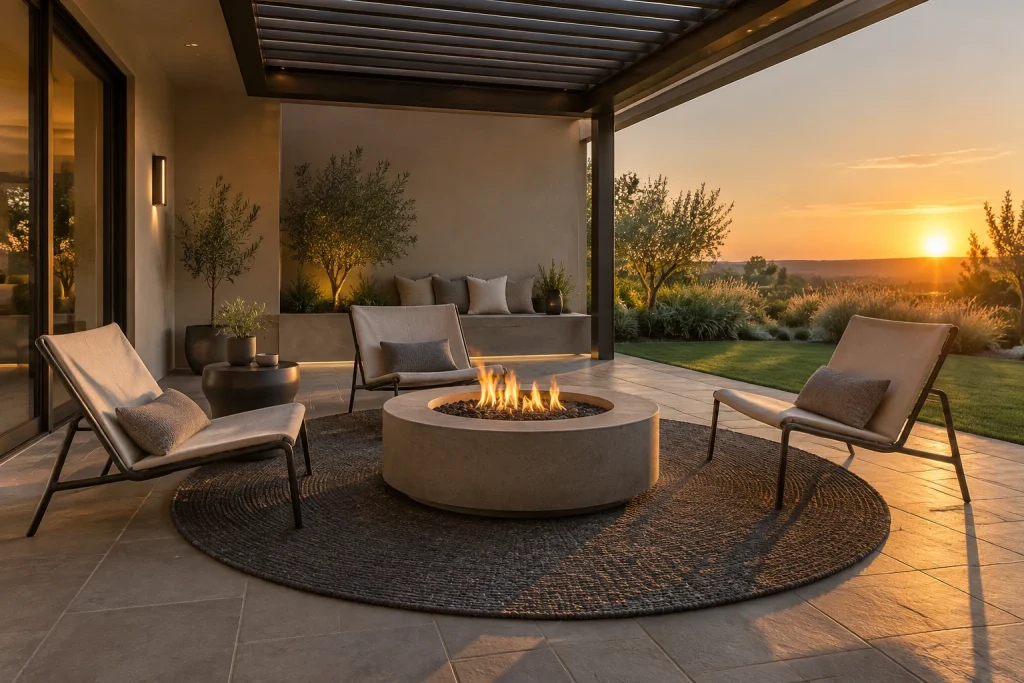
A charcoal round rug gives this fire-pit arrangement a strong, quiet outline against large-format gray tile. The circular concrete fire pit sits directly at its center, and three low sling chairs face inward around the perimeter. Because the furniture is pulled onto the rug rather than lined up with the patio edges, the grouping reads as its own destination beneath the slatted cover. The nearly monochrome palette—charcoal, concrete gray, black frames, and pale upholstery—keeps attention on form, texture, and the warm firelight. A small dark side table sits beside the left chair, while a built-in planter bench and potted trees occupy the back wall. The rug’s round edge also leaves broad bands of exposed tile, particularly toward the open lawn, so the setting retains an uncluttered, architectural feel.
Why it works: Matching the rug shape to the fire pit reinforces the circular conversation pattern and softens the patio’s straight tile grid.
- Round charcoal outdoor rug
- Circular concrete fire pit
- Three low sling chairs
- Small dark side table
- Gray tile flooring
Design tip: For a round fire-pit grouping, keep chair legs on the rug while maintaining visible tile around its edge.
4. Turn a Long Runner Into a Clear Outdoor Kitchen-to-Table Route
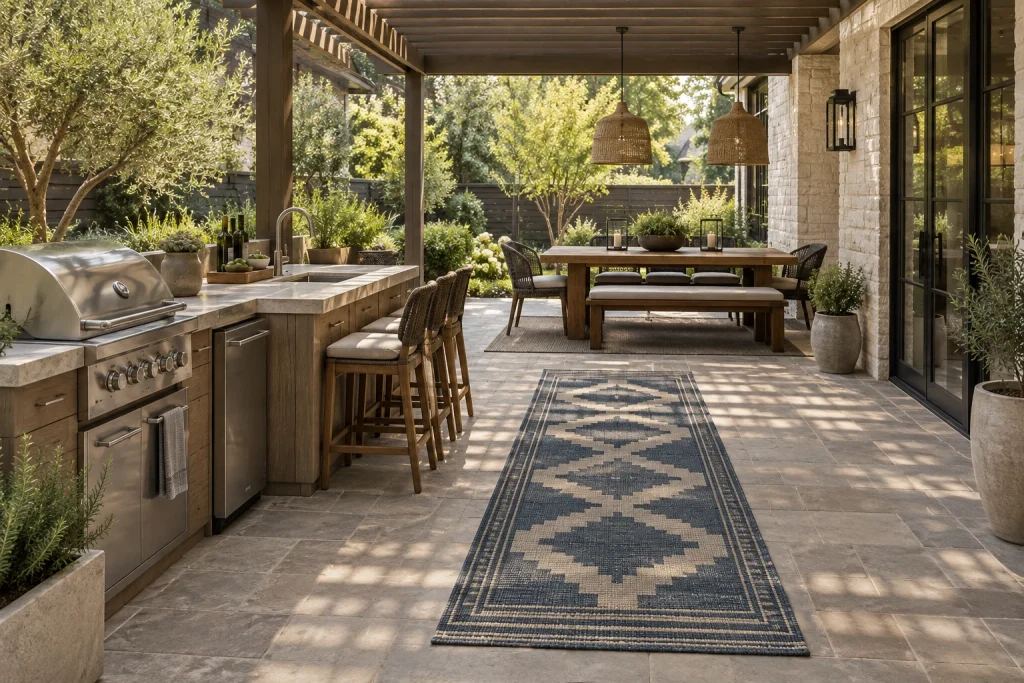
This slate blue and cream geometric runner creates a deliberate route through a pergola-covered cooking and dining area. It begins in the open tiled space beside the outdoor kitchen and leads toward the dining table, where a second, darker rug sits beneath the table and long bench. Using two rugs for two jobs is the key idea: the runner directs movement, while the dining rug marks the place to sit. The runner’s repeated diamond motif brings a graphic note to the warm wood cabinetry, woven barstools, wood table, and rattan pendant shades. Its long, narrow proportion also preserves substantial exposed tile on either side, including the space between the kitchen island and the runner. Planters, planting beds, and the garden beyond add softness without confusing the walkway’s straight visual line.
Why it works: The runner makes circulation legible in a multifunctional patio, while the separate dining rug prevents the eating area from blending into the passage.
- Slate blue and cream geometric runner
- Outdoor kitchen with wood cabinetry
- Woven barstools
- Wood dining table and long bench
- Separate rug beneath the dining table
Design tip: Use a runner only where it can remain visibly separate from barstools and dining furniture.
1. Define a Play Zone With a Soft, Patterned Rug
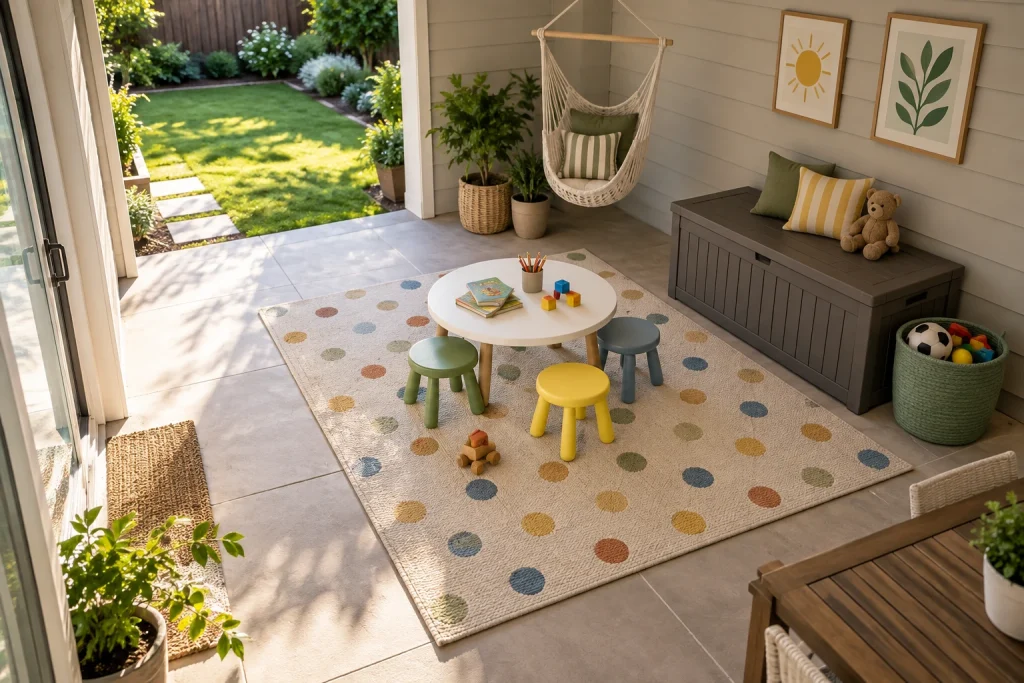
For outdoor-rug-styling-for-covered-patios, this setup shows how a generously sized rectangular rug can turn a tiled patio corner into a distinct children’s area without closing off the route to the lawn. The low round table and three small stools sit fully on the cream rug, while its muted blue, green, yellow, and rust dots bring color at floor level. A long dark storage bench and a woven toy basket line the wall rather than crowding the center. The hanging rope chair occupies the back corner, leaving the rug’s edges visible and the open tile near the sliding door clear. The result is playful but visually calm, with the rug doing the work of gathering small-scale furniture and toys into one readable zone.
Why it works: The rug gives lightweight children’s furniture a clear boundary, while its scattered dot pattern connects the varied stool colors without making the floor feel busy.
- Cream rectangular rug with muted multicolor dots
- Low white round table
- Green, yellow, and blue child-size stools
- Wall-side storage bench
- Open tiled circulation area beside the sliding door
Design tip: Choose a rug large enough to hold every table and stool leg, with a visible border around the activity area.
2. Layer a Patterned Rug Over a Natural Base
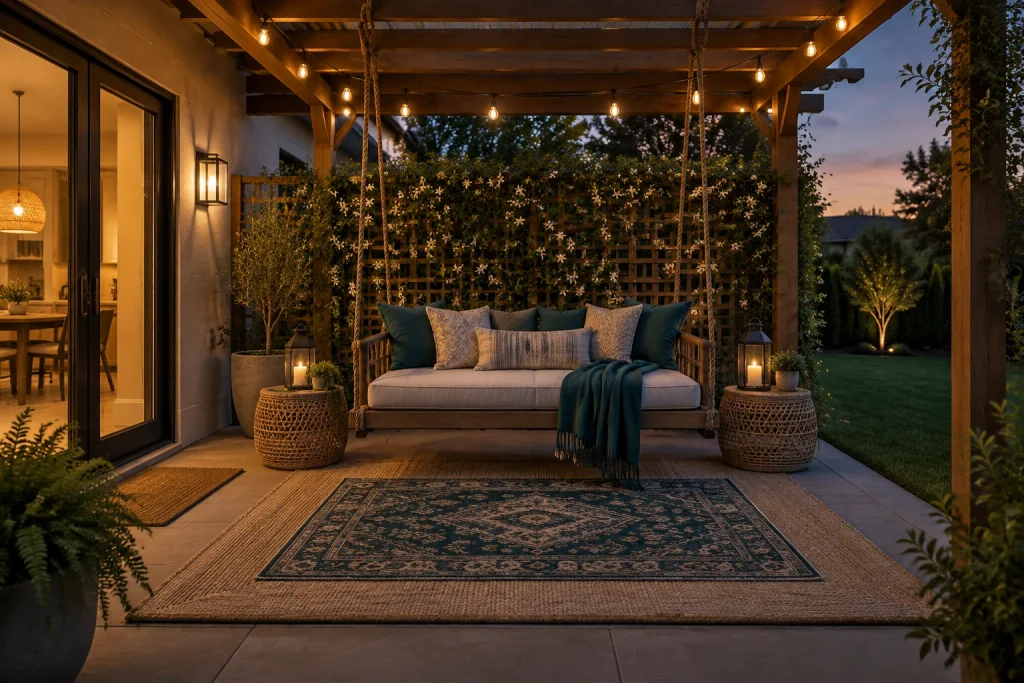
This evening patio uses two rugs to establish a lounge area beneath the wood pergola. A large, light natural-fiber-look rug creates the broad foundation, and a smaller dark teal patterned rug is centered on top for contrast and detail. The layered shapes sit in front of a suspended daybed with pale cushions, deep teal pillows, and a matching throw, making the dark rug feel intentional rather than isolated. Rattan side tables, lanterns with lit candles, a flowering vine on the wood lattice, and strands of exposed-bulb lights reinforce the warm, textured setting. Importantly, the rug grouping stays clear of the glass door at left, while the lawn remains open beyond the covered slab. The arrangement feels grounded from the doorway outward, even as the hanging seat becomes the visual focus.
Why it works: The larger neutral layer broadens the seating zone, and the smaller patterned layer adds depth that echoes the teal textiles on the daybed.
- Large neutral woven-look base rug
- Centered dark teal patterned accent rug
- Suspended wood-framed daybed
- Deep teal pillows and throw
- Warm string lights and candle lanterns
Design tip: Keep the top rug centered on the base layer and leave an even reveal around its edges for a deliberate layered look.
Final thoughts
Choose an outdoor rug by starting with the job it needs to do. Let a large rectangular style contain a dining or seating group, use a round rug to center a compact table or fire-pit circle, and reserve runners for walkways and narrow zones. Layering can add depth to a larger lounge, while stripes and geometric patterns can bring rhythm to simple patio surfaces. In every layout, keep enough bare tile, decking, or paving visible around the rug to preserve circulation and make the outdoor room feel open.