Eclectic-dining-tablescapes are less about following a single decorating style and more about creating connection between contrasting elements. A rustic wood table can hold patterned ceramics and brass, a concrete surface can feel inviting beneath fringe and candlelight, and a simple white table can support a sculptural vessel with real presence. The key is to repeat a few visual cues—such as a color, natural fiber, warm metal, or glass finish—while varying scale, texture, and pattern. These ideas show how runners, placemats, collected tabletop objects, and tailored place settings can make a dining table feel layered, personal, and practical for gathering.
1. Ground a Rustic Mix With Layered Neutrals
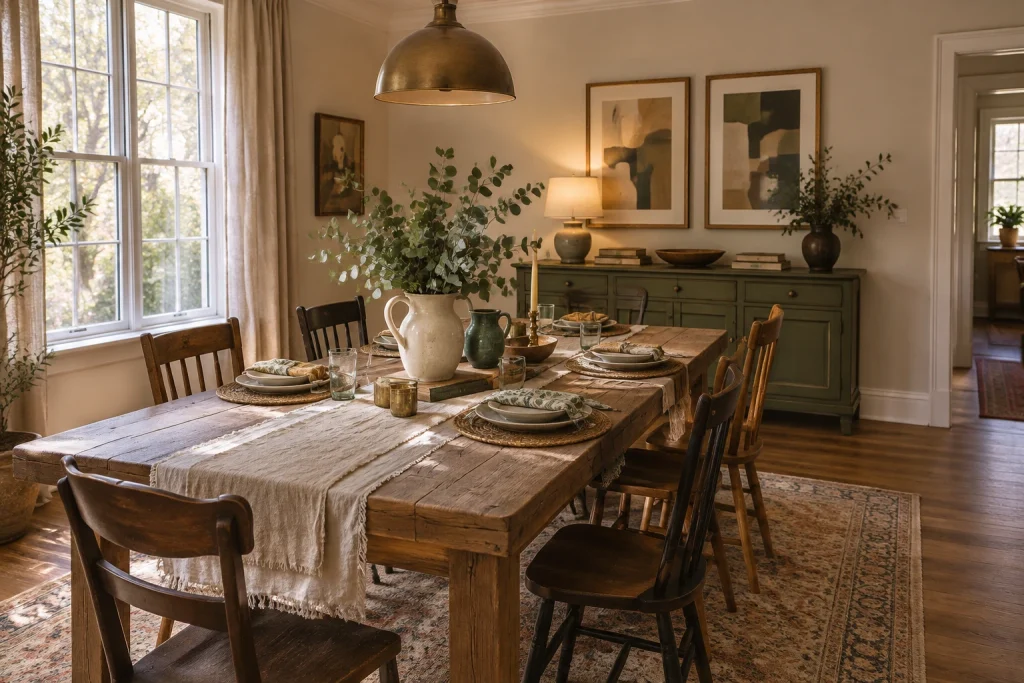
This eclectic-dining-tablescapes approach starts with contrast in texture rather than competing color. A weathered rectangular wood table is softened by a loosely draped, fringed ivory runner and a narrower tan textile beneath it. Round woven placemats give each setting definition, while stacked neutral plates, patterned napkins, clear drinking glasses, and green-toned glassware vary the surface without disrupting its warm, restrained palette. At the center, a large speckled ceramic pitcher of leafy branches sits beside a smaller green pitcher, books, and low brass-toned vessels. Mismatched wood chairs—from dark spindle-back styles to lighter slatted forms—extend the collected feeling. Behind the table, the green sideboard, framed abstract art, lamp, books, bowl, and dark vase create a composed visual echo.
Why it works: The table’s rough grain is balanced by soft linen, woven fiber, ceramic, glass, and metal, while repeated earth tones keep the mix cohesive.
- Fringed ivory table runner
- Round woven placemats
- Leafy branches in ceramic pitchers
- Mixed wood dining chairs
- Deep green sideboard with framed art
Design tip: Repeat one neutral textile across the table before adding varied chair finishes.
2. Pair Geometric Pattern With a Rounded Table
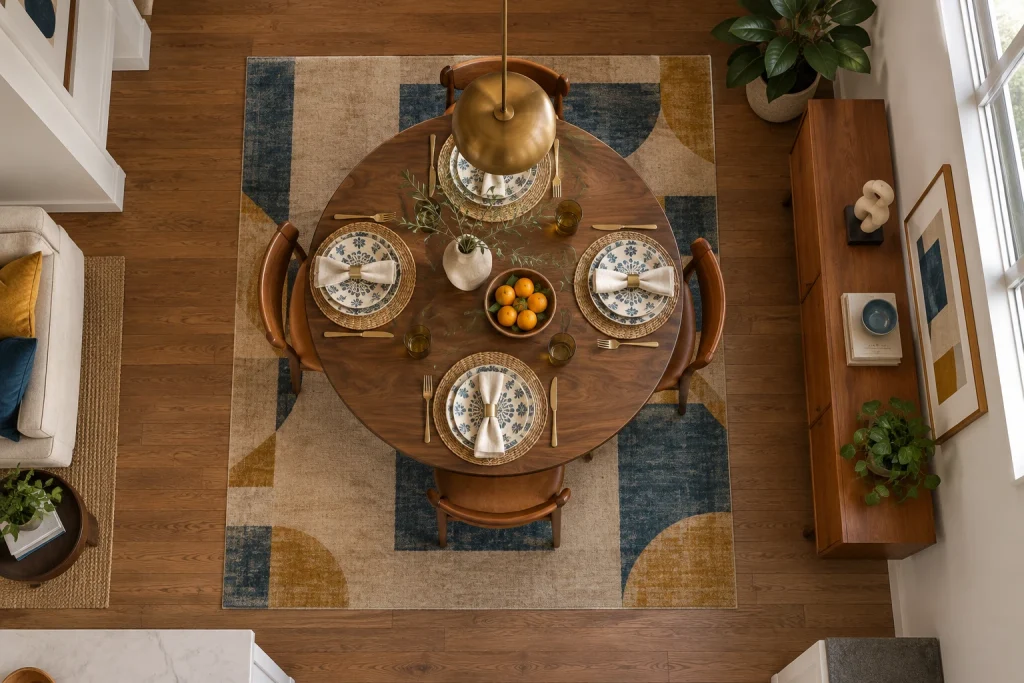
A round walnut table provides a quiet, curving base for a graphic arrangement of blue, mustard, and ivory. The geometric area rug establishes the palette below, while four woven placemats repeat its warm natural tone at the table. Each place setting combines a blue floral dinner plate with a folded ivory napkin secured by a small gold ring, creating a consistent pattern-and-solid pairing. Brass flatware and amber drinking glasses introduce low-key shine around the perimeter. In the middle, a petite pale vase with clipped greenery is joined by a shallow bowl of citrus, keeping the centerpiece low enough that the wood grain remains visible. The brass pendant above mirrors the table’s circular outline; nearby, the wood credenza, small sculptural object, stacked books, bowl, and leaning artwork continue the mix of warm wood and abstract form.
Why it works: Curves recur in the tabletop, pendant, chairs, citrus bowl, and rug motifs, making geometric pattern feel integrated rather than busy.
- Round walnut table
- Blue-and-ivory floral plates
- Mustard and petrol-blue geometric rug
- Brass pendant and flatware
- Low vase with greenery and citrus bowl
Design tip: On a round table, keep the centerpiece compact and let the outer wood edge stay visible.
3. Make a Narrow Kitchen Nook Feel Collected
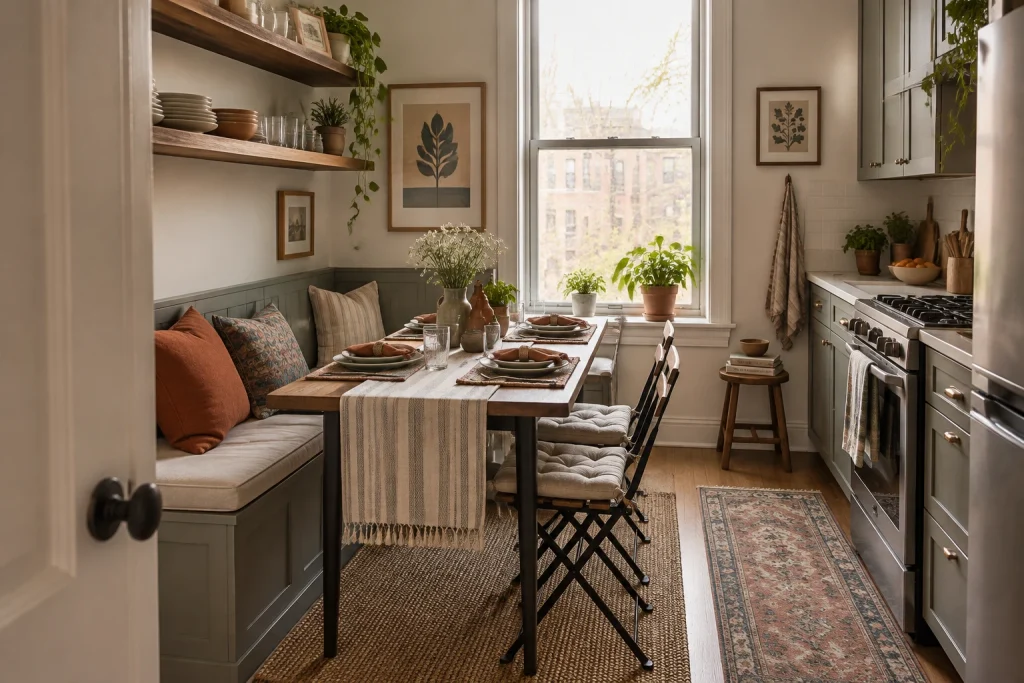
This kitchen dining nook uses a slim wood table to bridge a built-in green banquette and a row of black folding chairs with padded seats. A striped runner with fringe runs the length of the table, adding softness without concealing the wood top. Each setting layers muted green plates over woven rectangular placemats, with rust-colored napkins and clear textured glasses adding small, repeatable accents. A stoneware pitcher of airy white flowers and a few small vessels form a narrow centerpiece suited to the table’s proportions. The banquette pillows bring in rust, cream, and patterned teal tones, while open wood shelves display stacked dishes, bowls, glasses, framed pieces, and trailing plants. A patterned runner rug defines the open floor strip beside the kitchen cabinets and range.
Why it works: The long, linear elements—the runner, shelves, banquette, table, and floor rug—work with the room’s narrow shape instead of fighting it.
- Green built-in banquette
- Black folding chairs with cushions
- Fringed striped table runner
- Woven rectangular placemats
- Open shelves with dishes and trailing plants
Design tip: Use a slim runner and low centerpiece to preserve usable surface on a narrow table.
4. Layer Natural Fibers in a Light-Filled Sunroom
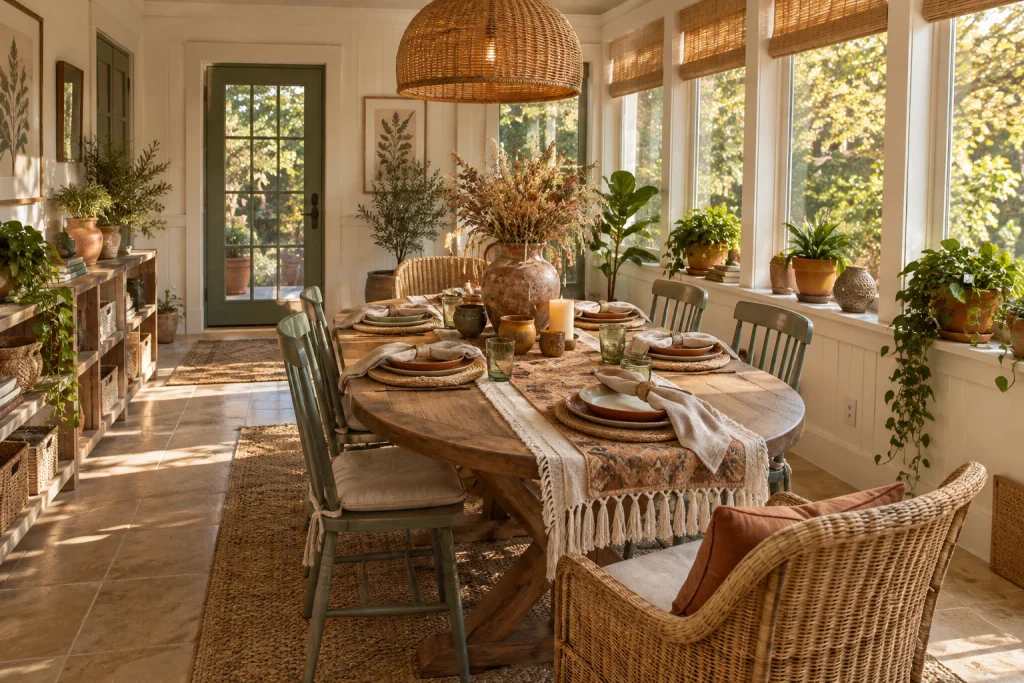
This sunroom table layers earthy materials under a large woven rattan pendant. An oval wood table sits on a chunky woven rug, with a patterned terracotta-and-cream runner laid over a fringed ivory textile. Woven round placemats support stacked sage and terracotta plates, while loosely knotted neutral napkins, green textured tumblers, and small amber vessels create a relaxed mix of finishes. A large weathered ceramic urn filled with dried stems anchors the center, accompanied by a pillar candle and smaller vessels. Painted green wood chairs sit alongside woven armchairs with light cushions and rust pillows, reinforcing the room’s mixed-material character. Along the windows, an assortment of potted plants and woven shades bring more organic texture; open shelving on the opposite wall holds baskets, books, pottery, and greenery.
Why it works: Rattan, woven fiber, aged ceramic, wood, linen, and plants share a natural finish, so their varied textures read as one layered composition.
- Oversized rattan pendant
- Oval wood table
- Patterned and fringed layered runners
- Dried botanical urn centerpiece
- Woven chairs, rug, and storage baskets
Design tip: Combine several natural textures, but limit the palette to a few earth tones and one muted painted color.
1. Ground an Industrial Table With Soft, Low Layers
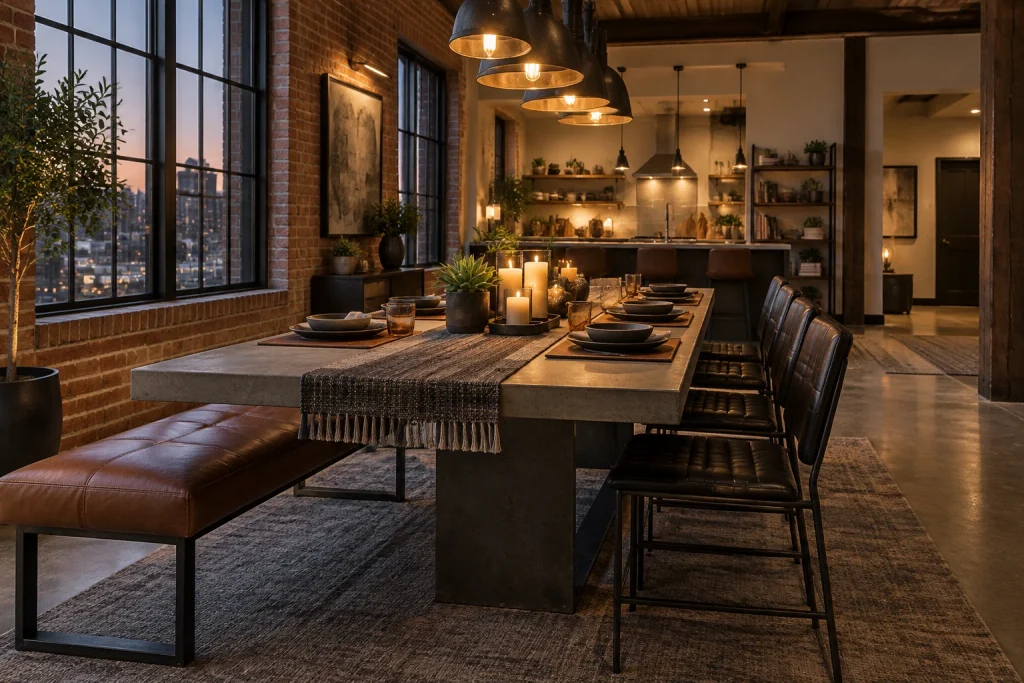
This eclectic dining tablescape lets hard-edged materials carry a softer, more intimate setting. A long concrete table is centered on a dark rug, with a cognac leather bench to one side and black, channel-tufted dining chairs to the other. A charcoal woven runner, finished with fringe, breaks up the expanse of concrete without concealing it. Along its center, a compact potted plant, small dark vessels, and candles in varied heights create a warm focal line. Each place setting stays tailored: brown placemats, layered dark dishes, and amber-toned glassware echo the room’s leather, metal, and brick surfaces. Black factory-style pendants and the glow from the candles reinforce the table’s evening mood while leaving the concrete and steel visibly part of the composition.
Why it works: The restrained charcoal, brown, and black palette connects concrete, leather, brick, and metal, while the runner and candlelight prevent the industrial finishes from feeling austere.
- Concrete tabletop
- Fringed charcoal runner
- Cognac leather bench
- Amber glassware
- Clustered pillar candles
Design tip: Use one long textured runner to soften a concrete or metal table without hiding its surface.
2. Layer Blue Pattern Over a Whitewashed Table
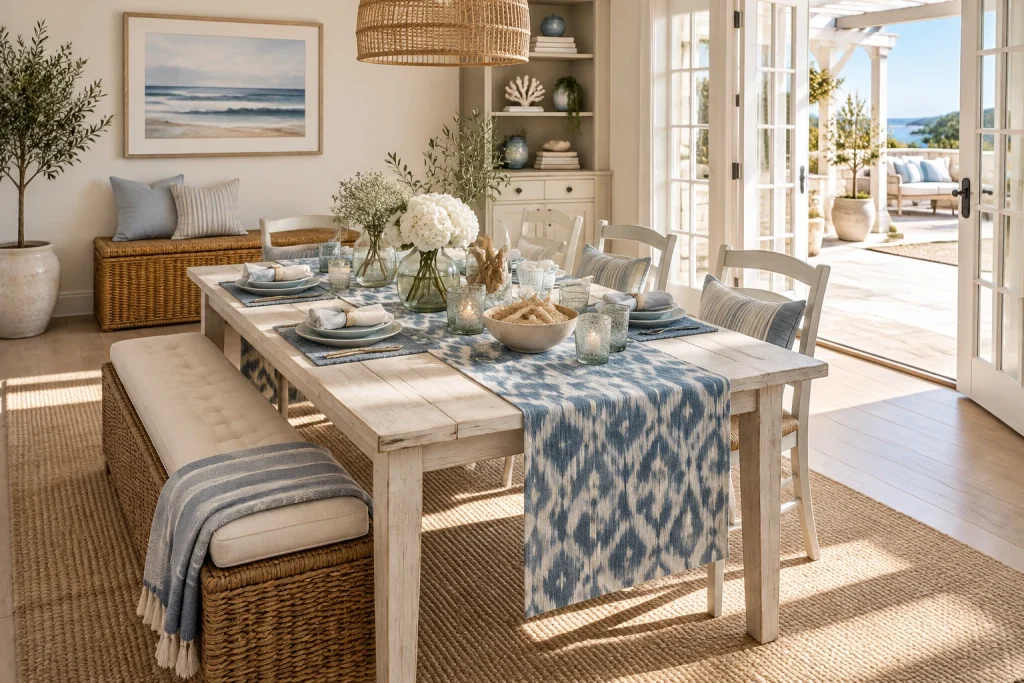
A whitewashed plank table becomes a light, flexible base for coastal eclectic layering in shades of blue, sea-glass green, and sandy beige. The table is dressed with a blue-and-white patterned runner placed lengthwise, then set with blue woven placemats, pale layered plates, and folded napkins held by natural-colored rings. Clear and green-tinted glass vessels create a deliberately varied centerpiece: white blooms, airy leafy stems, and small candleholders sit alongside a shallow bowl filled with pale shell-like forms. The mix is cohesive rather than matched, because blue repeats across the runner, placemats, pillows, and throw. A woven bench with a cream cushion adds another natural texture at the near side, while the open French doors keep the room visually bright and airy.
Why it works: The palette is repeated across textiles, glass, and tableware, while whitewashed wood and woven fibers give several different blue patterns a calm backdrop.
- Whitewashed plank table
- Blue patterned table runner
- Blue woven placemats
- Green-tinted glass vessels
- Woven bench seating
Design tip: Repeat one color in your runner, placemats, and glassware, then vary the pattern scale.
3. Make One Sculptural Vessel Do the Visual Work
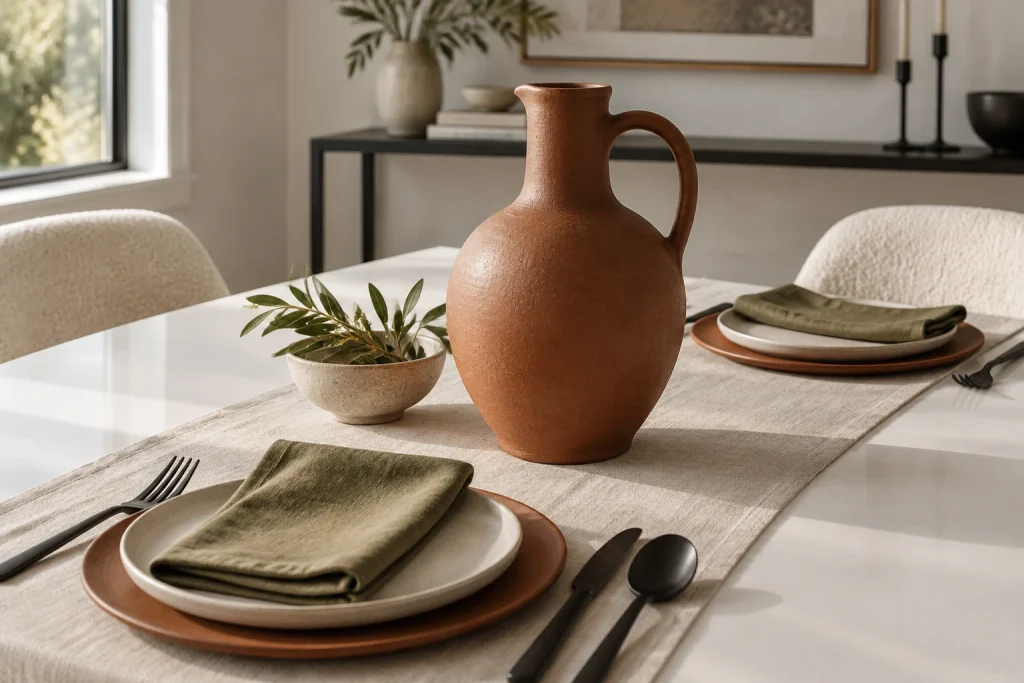
This minimal setting shows how a single expressive object can create an eclectic note on an otherwise quiet table. A large terracotta ceramic pitcher, with a rounded body and pronounced loop handle, takes center stage on a natural linen runner. Its warm, matte surface is balanced by a small stoneware bowl holding olive branches. At each visible place setting, a rust-colored charger sits beneath an ivory plate, while an olive napkin adds a soft, folded layer on top. Matte black flatware introduces a crisp graphic contrast against the white lacquer tabletop and pale runner. The tabletop remains notably open around the centerpiece and settings, allowing the shape, color, and texture of each piece to register clearly rather than compete for attention.
Why it works: A restrained neutral foundation makes the terracotta pitcher, olive napkins, and black flatware feel intentional. The setting mixes finishes and colors without crowding the glossy white surface.
- Terracotta handled pitcher
- Natural linen runner
- Rust-colored chargers
- Olive green napkins
- Matte black flatware
Design tip: Choose one oversized vessel as the centerpiece, then keep the surrounding objects low and limited.
4. Build a Maximalist Table Around Pattern and Brass
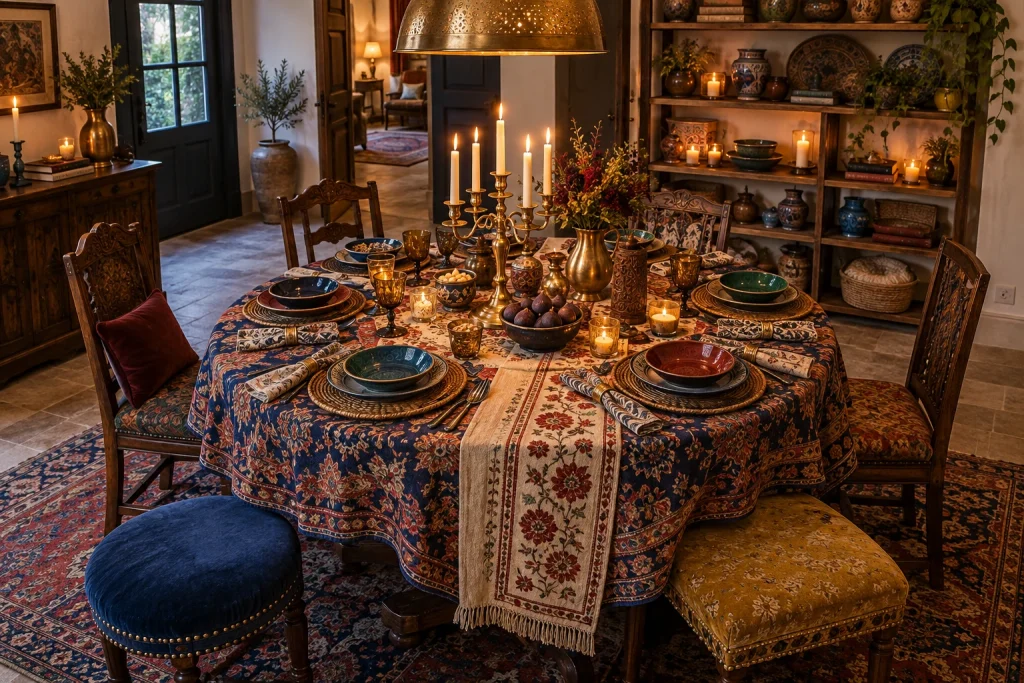
This round dining table embraces a full global eclectic mix by layering saturated textiles, carved wood, colored glass, ceramics, and brass. A deep indigo floral cloth covers the table, while a narrower cream runner with red floral motifs runs through the center. The place settings continue the pattern play with woven round chargers, patterned napkins, amber goblets, and bowls in deep teal, ruby, and blue. A brass candelabra and a brass pitcher of loose, richly colored flowers form the centerpiece, surrounded by small patterned vessels, votive candles, and a bowl of dark fruit. The styling is dense, but each place setting retains its own defined area. Carved wood chairs, upholstered seating, a brass pendant, and shelves of pottery visually extend the table’s collected character throughout the room.
Why it works: Repeated warm brass creates a visual thread through the busy mix, while the indigo cloth and cream runner give the many ceramics and textiles a clear color framework.
- Indigo floral tablecloth
- Cream floral runner
- Brass candelabra
- Amber goblets
- Mixed jewel-toned bowls
Design tip: In a pattern-heavy setting, repeat one metal finish in the centerpiece and candleholders to unify the mix.
1. Ground a Seasonal Table With Plaid and Candlelight
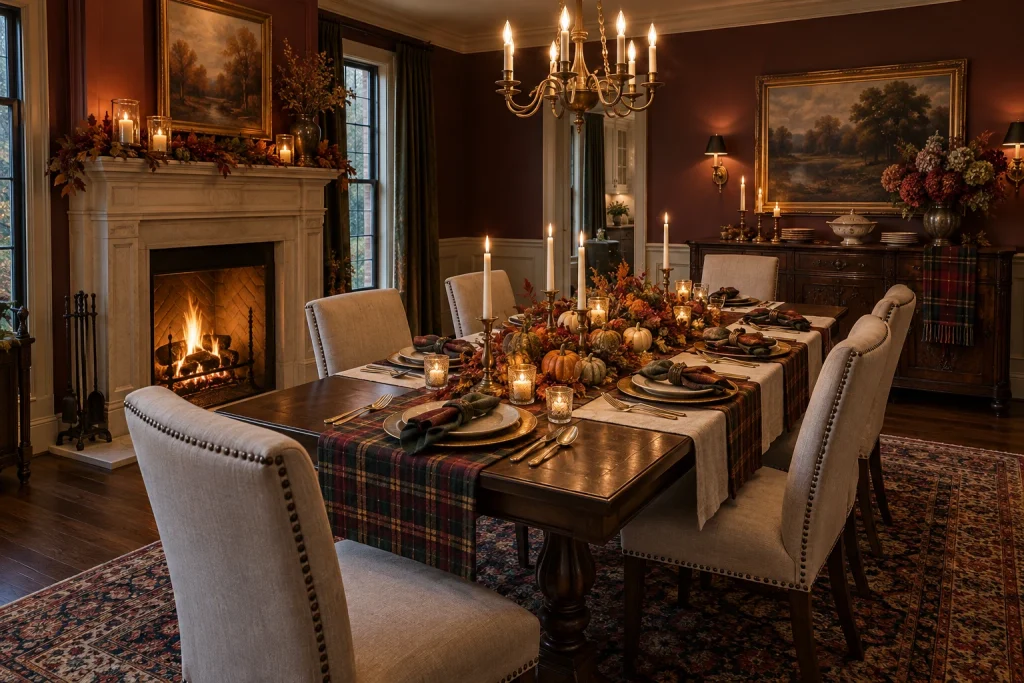
This eclectic-dining-tablescapes look builds its richness from disciplined layering rather than a single dominating pattern. A dark wood dining table is crossed with a deep green-and-burgundy tartan runner, then softened by long, pale linen overlays at the place settings. The centerpiece keeps the same autumnal register: small pumpkins in varied colors, dried leaves, branches, and low votive holders run down the center, while tall taper candles rise above in brass candlesticks. Stacked plates combine dark rims with warm metallic chargers, and each setting gets a folded green or burgundy napkin. Upholstered dining chairs, a patterned rug, framed landscape paintings, and the carved fireplace surround extend the room’s traditional character without competing with the table.
Why it works: The repeated burgundy, green, brass, and warm wood create continuity across textiles, tableware, and the surrounding room. Varying the centerpiece height keeps the long arrangement visually active.
- Burgundy-and-green tartan table runner
- Pale linen overlays
- Mixed pumpkins, dried foliage, and branches
- Brass taper holders and glass votives
- Layered chargers, plates, and folded napkins
Design tip: Repeat one plaid accent down the table, then keep the remaining linens largely solid.
2. Mix Wood, Woven Fibers, and Ceramics on a Covered Patio
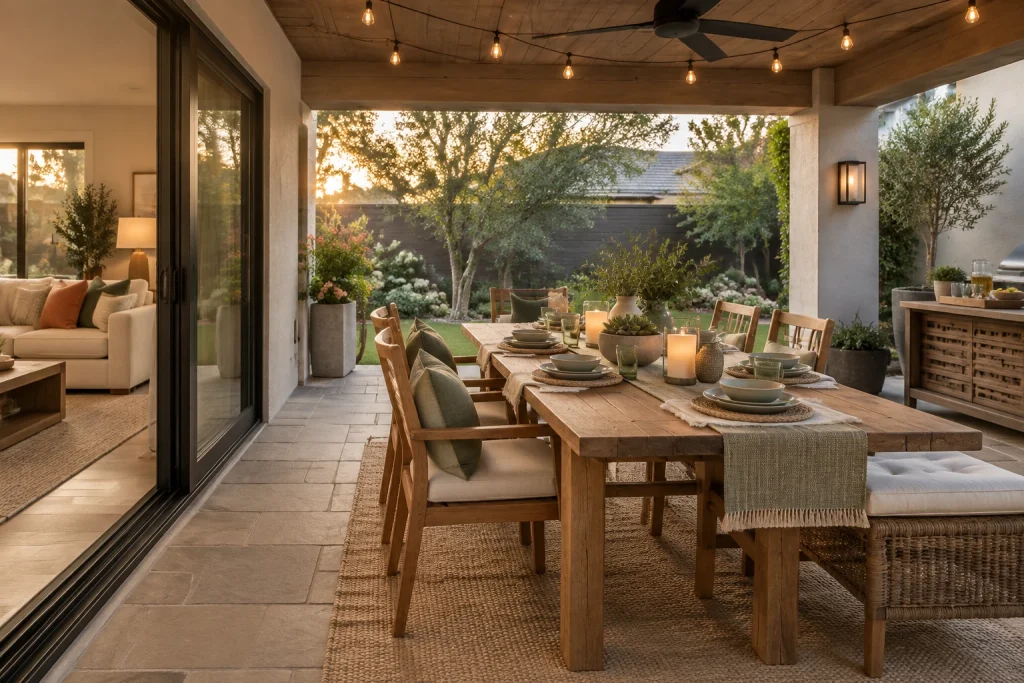
A weathered-looking wood table gives this covered patio table its relaxed foundation, while mixed natural textures make the setting feel collected. Woven round placemats sit beneath stacked gray-green bowls and plates; clear green drinking glasses add another translucent layer. A narrow fringed runner and a loosely draped moss-green textile soften the table’s straight lines. At the center, a low concrete-like planter with succulents is paired with ceramic vessels, a textured dark vase, and pillar candles in clear glass hurricanes. Wood chairs with pale upholstered seats and green pillows line one side, while a woven bench with a light cushion occupies the near end. A large woven rug defines the dining area beneath the table, and the open sliding glass door visually connects it to the softly furnished interior.
Why it works: The palette stays quiet enough for the materials to do the work: grainy wood, braided fibers, smooth ceramics, glass, and greenery each register distinctly. Low centerpieces preserve sightlines across the table.
- Plank-top wood dining table
- Woven round placemats and area rug
- Gray-green ceramic dinnerware
- Green glassware and clear candle hurricanes
- Succulent planter with ceramic vessels
Design tip: For outdoor dining, combine one woven layer, one ceramic layer, and one glass layer at each setting.
Final thoughts
The most successful eclectic dining tablescapes balance variety with a clear visual thread. Start with a grounding surface or textile, then build outward with place settings that repeat a few colors or materials. Keep centerpieces in proportion to the table, especially on narrow surfaces, and mix heights without blocking conversation. Whether the look leans rustic, coastal, industrial, seasonal, or maximalist, layered linens, natural fibers, ceramics, glass, and warm metallic accents can give the table a collected finish without making it feel cluttered.